A Victorian-era crowd dressed in formal gowns and top hats admires a tall giraffe inside a fenced enclosure at the London Zoo in Regent's Park, with classical pavilion architecture, leafy trees, and a peacock in the foreground.

The Wonder of the Menagerie: London Zoo, the Victorian Imagination, and the Giraffe That Changed Everything

In 1836, four giraffes arrived at the Zoological Gardens of Regent’s Park and London went wild. This is the story of the Victorian zoo — the wonder it provoked, the science it advanced, and the giraffe named Zarafa who started it all.
The Wonder of the Menagerie: London Zoo, the Victorian Imagination, and the Giraffe That Changed Everything Read More »

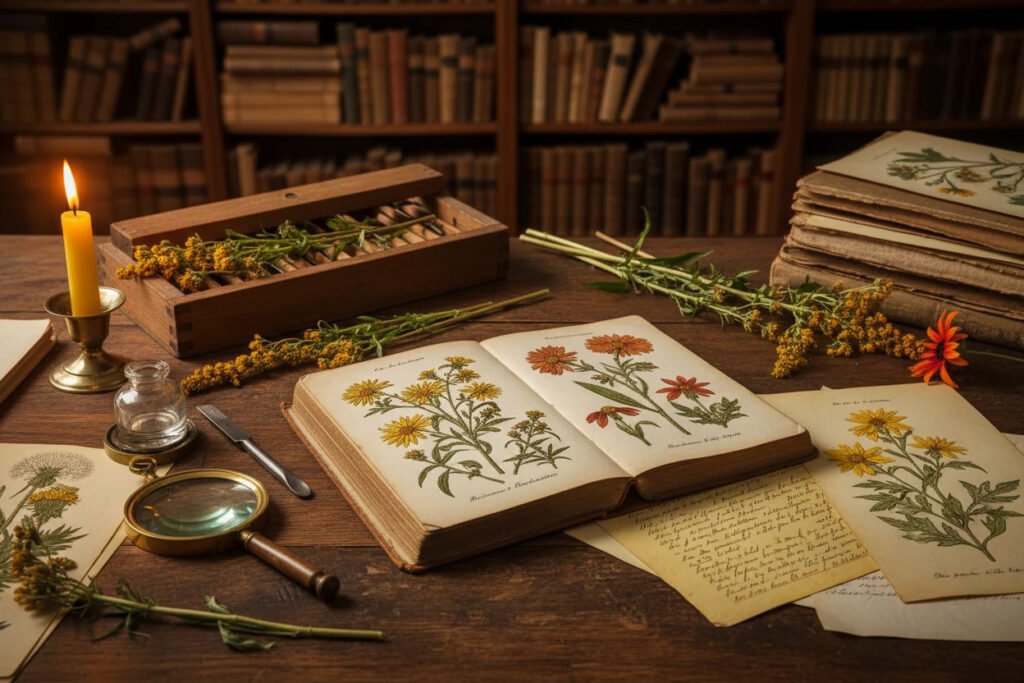
An early 19th-century botanist's wooden study desk illuminated by candlelight, featuring open illustrated botanical books, hand-written manuscripts, a magnifying glass, pressed yellow flowers, and dried plant specimens in wooden trays.

The Botanist’s Hand: Christian Schkuhr and the Making of a Scientific Book in 1808

In 1808, Christian Schkuhr completed his Botanisches Handbuch in Wittenberg — writing the text, drawing the plants, and engraving the copper plates himself. This is the story of what it took to make a scientific book before photography, before lithography, before any of the shortcuts we take for granted.

The Botanist’s Hand: Christian Schkuhr and the Making of a Scientific Book in 1808 Read More »

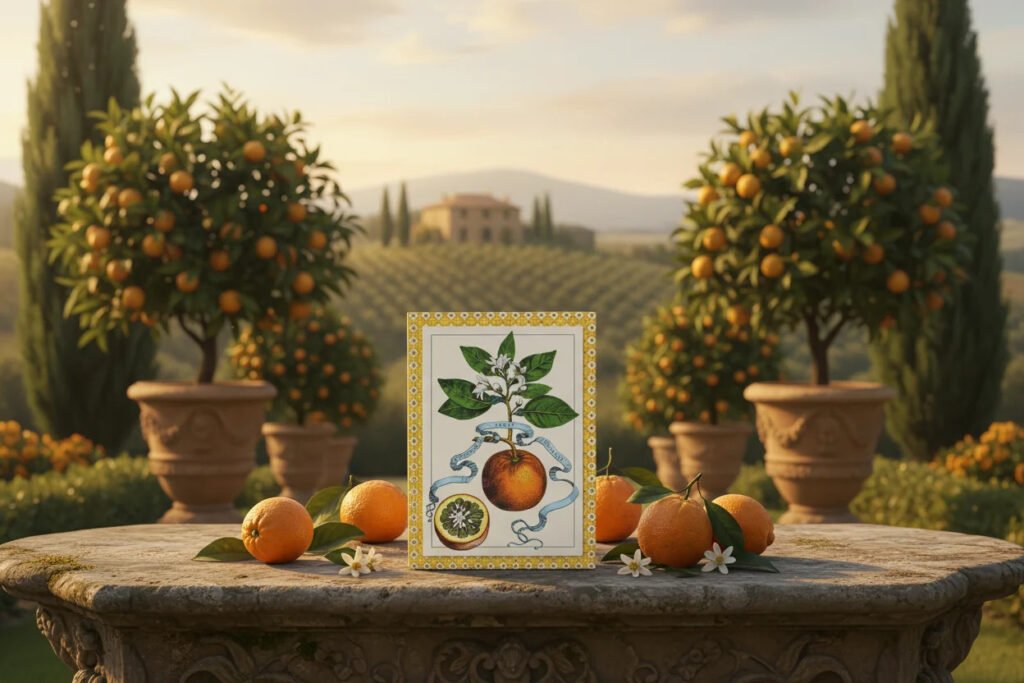
A botanical hardcover notebook featuring a vintage citrus illustration inspired by Giovanni Battista Ferrari's Hesperides stands on a stone table with fresh oranges and orange blossoms, set against an Italian villa garden with potted citrus trees and rolling hills at sunset.

The Golden Apple and the Baroque Garden: Ferrari’s Hesperides and the First Book of Citrus

When Giovanni Battista Ferrari published Hesperides in Rome in 1646, he created the first book in history devoted entirely to citrus — and one of the most sumptuous works of Baroque botanical art ever produced. A look at the Jesuit botanist, the Barberini patrons, the golden apples of mythology, and the copper engravings that made science and wonder inseparable.

The Golden Apple and the Baroque Garden: Ferrari’s Hesperides and the First Book of Citrus Read More »

A black botanical notebook featuring an Otto Schmeil tulip illustration plate rests on a desk in the foreground, with potted tulips on the windowsill and a female teacher writing on a chalkboard in the background.

The Tulip and the Classroom: Otto Schmeil and the Democratization of Botanical Science

Otto Schmeil’s Lehrbuch der Botanik (1900) was not a book for specialists but for everyone — a masterpiece of pedagogical illustration that made the complexity of plant life visible and comprehensible. A look at the tulip life cycle, the inverted year of Colchicum autumnale, and the art of teaching through images.

The Tulip and the Classroom: Otto Schmeil and the Democratization of Botanical Science Read More »

A vintage natural history journal with a turtle illustration from Schöpf’s Naturgeschichte der Schildkröten stands on a desk in a scientist's study, surrounded by specimen jars, an open anatomical book, a brass magnifying glass, inkwell, and cabinet display of reptile skeletons.

The Shell and the Scalpel: Schöpf’s Naturgeschichte der Schildkröten and the Birth of Herpetology

Johann David Schöpf arrived in North America as a military surgeon during the Revolutionary War and left with the raw material for the most comprehensive study of turtles the world had ever seen. A look at the Naturgeschichte der Schildkröten, the birth of herpetology, and the extraordinary anatomy of the turtle shell.

The Shell and the Scalpel: Schöpf’s Naturgeschichte der Schildkröten and the Birth of Herpetology Read More »

A Tokyo-themed journal featuring vintage travel posters stands on a low wooden table next to a matcha bowl in a traditional tatami room, with shoji screens framing Tokyo Tower at sunset with falling cherry blossom petals.

The City Between Two Worlds: Tokyo, Mid-Century Aesthetics, and AI-Generated Design

Tokyo is the world’s most paradoxical city — ancient and ultramodern, intimate and overwhelming, traditional and perpetually reinventing itself. A look at how mid-century travel poster artists captured its essential tension, from the ukiyo-e tradition to the vertical skyline of Tokyo Tower and Skytree.

The City Between Two Worlds: Tokyo, Mid-Century Aesthetics, and AI-Generated Design Read More »

Vintage-style journal featuring historical tea advertising artwork displayed on a wooden tea shop counter, surrounded by floral teacups, silver teapots, and glass tea jars.

The Cup That Conquered the World: Tea, Empire, and the Golden Age of Advertising

Tea has financed empires, defined social rituals, and inspired some of the most beautiful commercial art ever produced. A look at the Golden Age of Tea — from the Victorian afternoon tea table to the global trade routes that filled the cup — and the early 20th-century advertising collages that captured it all.

The Cup That Conquered the World: Tea, Empire, and the Golden Age of Advertising Read More »

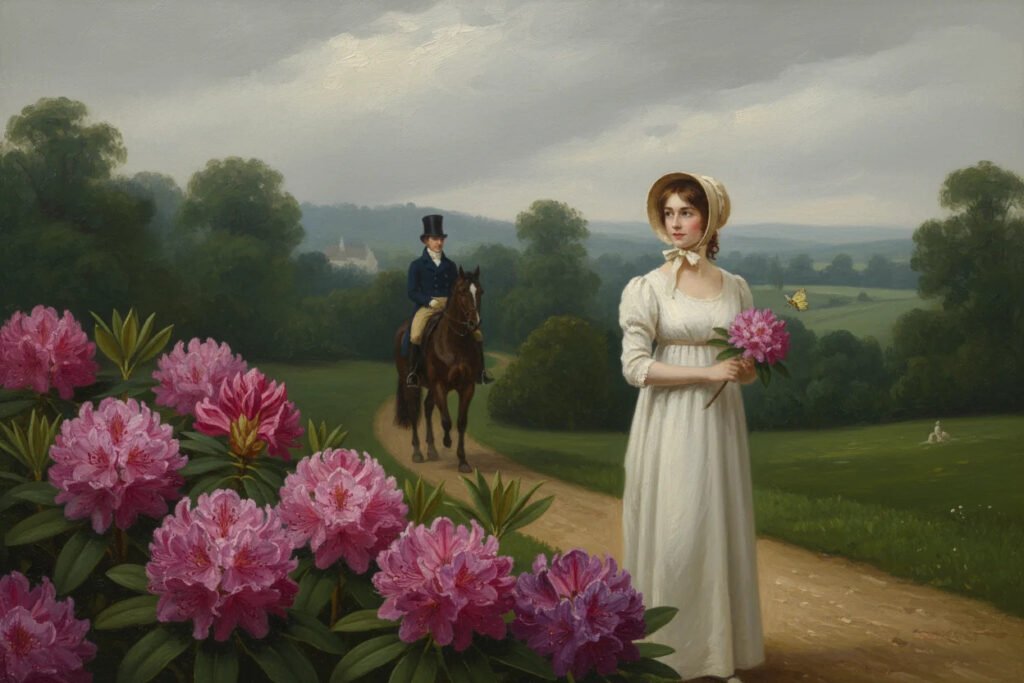
A Regency-era woman in a white dress and bonnet holding pink rhododendrons on a country path, while a gentleman on horseback approaches in the background near lush green fields and flowering bushes.

The Most Expensive Flower Book Ever Made: Thornton’s Temple of Flora

Robert John Thornton spent a decade and his entire fortune producing The Temple of Flora — the most ambitious and expensive botanical book of the Georgian era. A look at the mezzotint masterpiece, the Pontic Rhododendron, and the visionary ruin behind one of the greatest achievements in natural history illustration.

The Most Expensive Flower Book Ever Made: Thornton’s Temple of Flora Read More »