Flora

victorian english wall gallery twelve robert tyas 1896 language of flowers

The Secret Language of Bouquets: Robert Tyas and the Floral Emblems of 1896

In Victorian England, flowers were not merely decorative. They were a language — precise, codified, and capable of conveying emotions that the strict social etiquette of the era made impossible to express directly. Robert Tyas’s The Language of Flowers, or, Floral Emblems of Thoughts, Feelings, and Sentiments, published in London in 1896, was one of the most beautiful documents of this tradition: twelve hand-coloured plates showing bouquets of garden and wild flowers, each combination a message composed as carefully as any letter.

The Secret Language of Bouquets: Robert Tyas and the Floral Emblems of 1896 Read More »

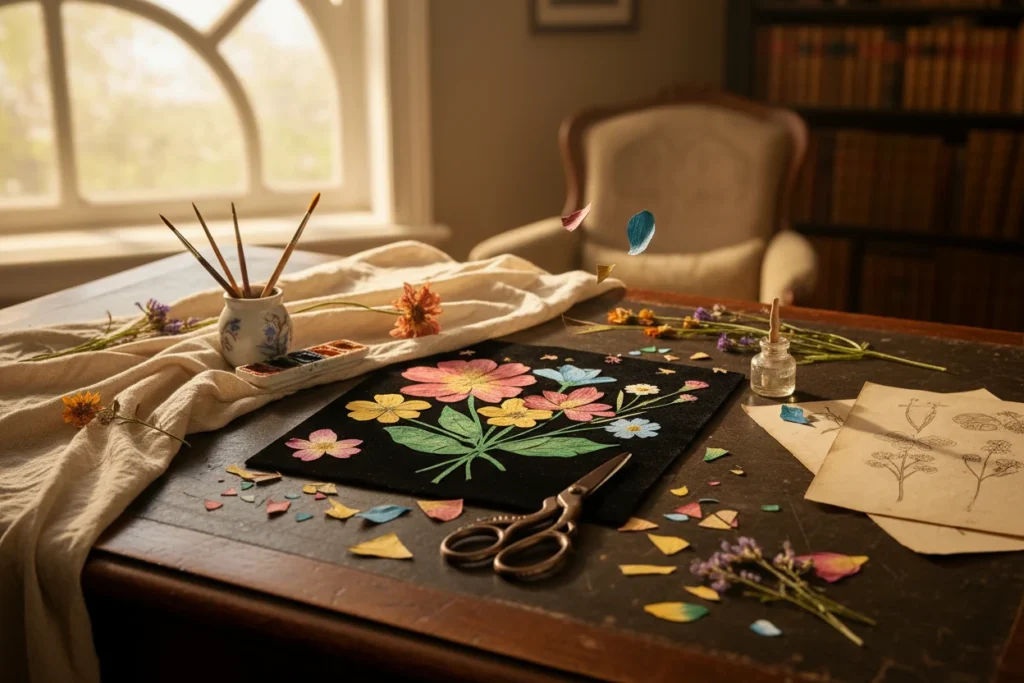
A Victorian-era artist desk bathed in warm sunlight, featuring a colorful cut-paper floral artwork mounted on black paper next to crafting scissors, paper scraps, botanical sketches, paintbrushes, and dried flowers.

Scissors and Black Paper: The Mysterious Ellen W. and Her 1835 Album of Cut-Paper Flowers

She is known only as Ellen W. — no surname, no biography, no portrait. And yet the album of 26 cut-paper flower compositions she created in Great Britain in 1835 is among the most extraordinary examples of botanical art of the early Victorian era: each petal individually cut, each composition arranged against stark black paper that makes the colours appear almost luminous.

Scissors and Black Paper: The Mysterious Ellen W. and Her 1835 Album of Cut-Paper Flowers Read More »

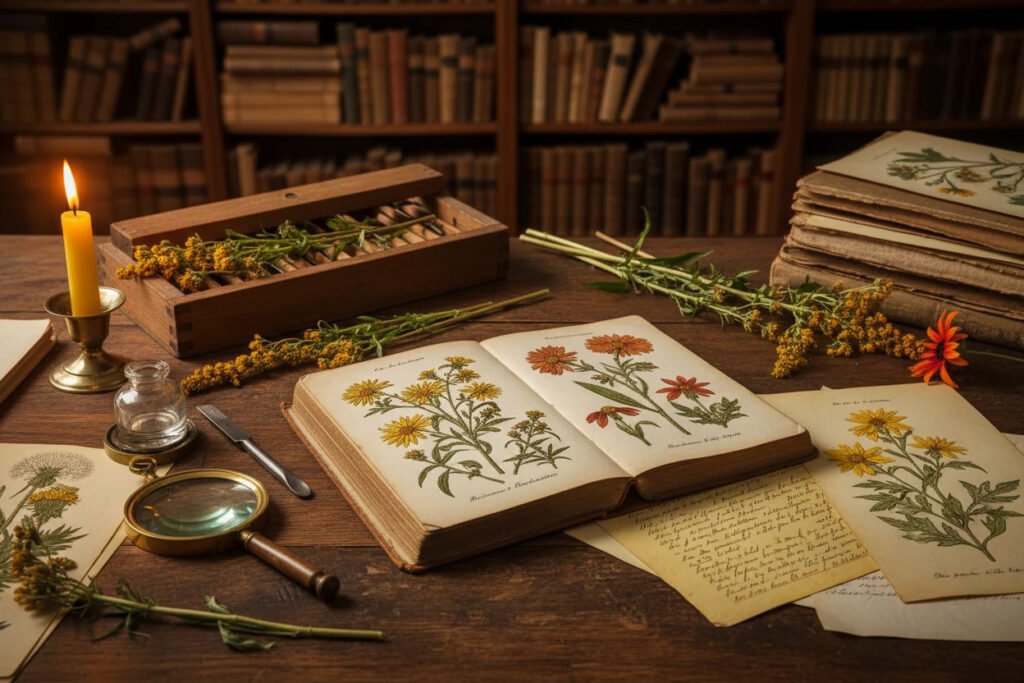
An early 19th-century botanist's wooden study desk illuminated by candlelight, featuring open illustrated botanical books, hand-written manuscripts, a magnifying glass, pressed yellow flowers, and dried plant specimens in wooden trays.

The Botanist’s Hand: Christian Schkuhr and the Making of a Scientific Book in 1808

In 1808, Christian Schkuhr completed his Botanisches Handbuch in Wittenberg — writing the text, drawing the plants, and engraving the copper plates himself. This is the story of what it took to make a scientific book before photography, before lithography, before any of the shortcuts we take for granted.

The Botanist’s Hand: Christian Schkuhr and the Making of a Scientific Book in 1808 Read More »

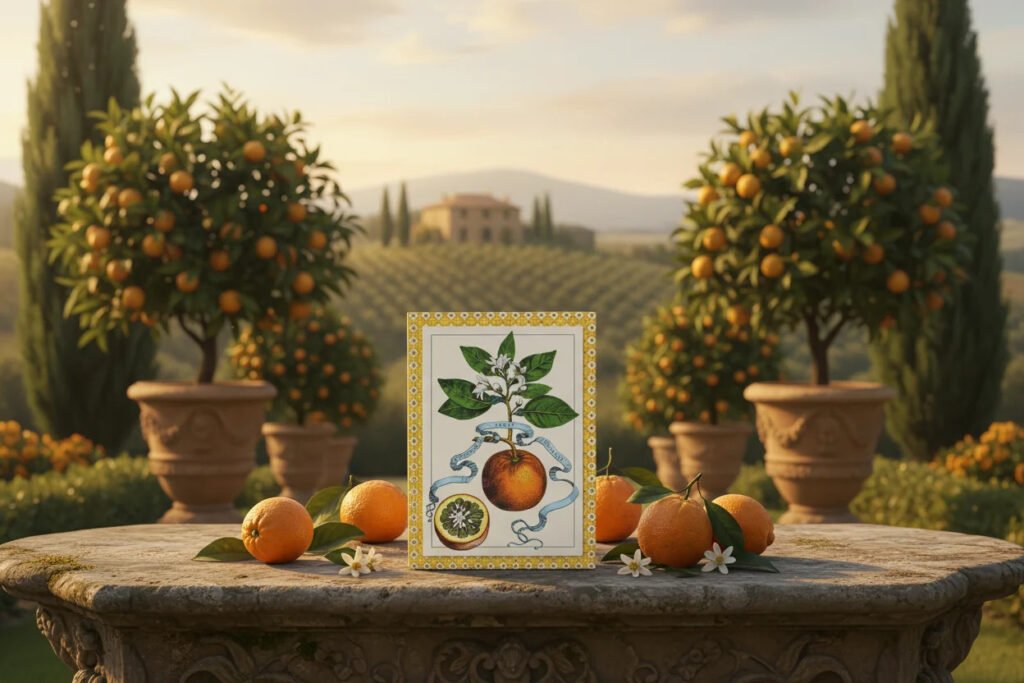
A botanical hardcover notebook featuring a vintage citrus illustration inspired by Giovanni Battista Ferrari's Hesperides stands on a stone table with fresh oranges and orange blossoms, set against an Italian villa garden with potted citrus trees and rolling hills at sunset.

The Golden Apple and the Baroque Garden: Ferrari’s Hesperides and the First Book of Citrus

When Giovanni Battista Ferrari published Hesperides in Rome in 1646, he created the first book in history devoted entirely to citrus — and one of the most sumptuous works of Baroque botanical art ever produced. A look at the Jesuit botanist, the Barberini patrons, the golden apples of mythology, and the copper engravings that made science and wonder inseparable.

The Golden Apple and the Baroque Garden: Ferrari’s Hesperides and the First Book of Citrus Read More »

A black botanical notebook featuring an Otto Schmeil tulip illustration plate rests on a desk in the foreground, with potted tulips on the windowsill and a female teacher writing on a chalkboard in the background.

The Tulip and the Classroom: Otto Schmeil and the Democratization of Botanical Science

Otto Schmeil’s Lehrbuch der Botanik (1900) was not a book for specialists but for everyone — a masterpiece of pedagogical illustration that made the complexity of plant life visible and comprehensible. A look at the tulip life cycle, the inverted year of Colchicum autumnale, and the art of teaching through images.

The Tulip and the Classroom: Otto Schmeil and the Democratization of Botanical Science Read More »

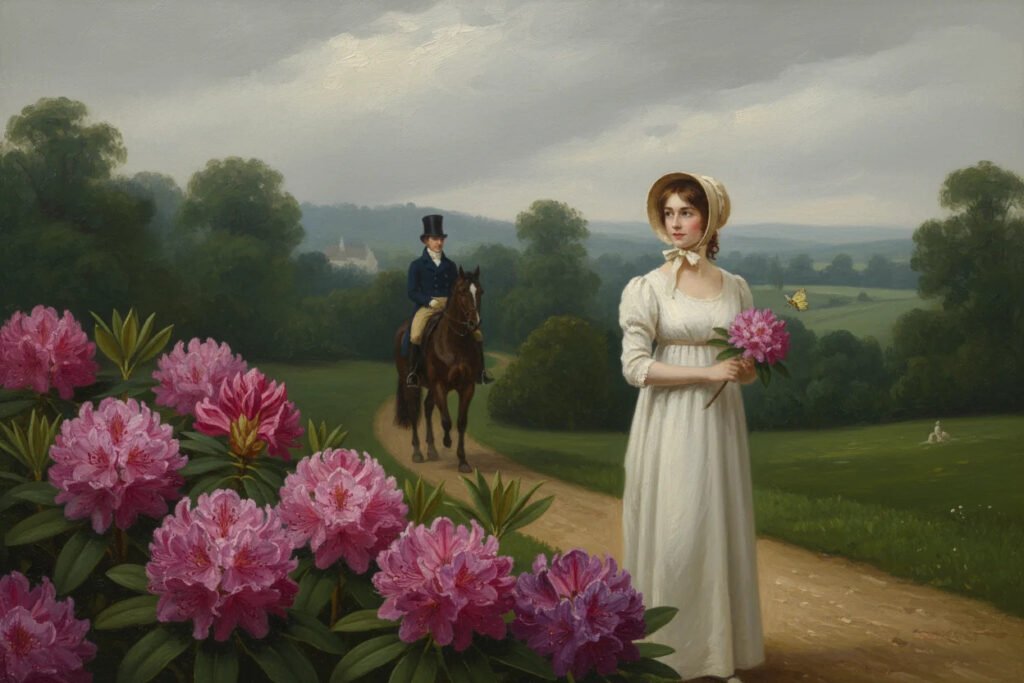
A Regency-era woman in a white dress and bonnet holding pink rhododendrons on a country path, while a gentleman on horseback approaches in the background near lush green fields and flowering bushes.

The Most Expensive Flower Book Ever Made: Thornton’s Temple of Flora

Robert John Thornton spent a decade and his entire fortune producing The Temple of Flora — the most ambitious and expensive botanical book of the Georgian era. A look at the mezzotint masterpiece, the Pontic Rhododendron, and the visionary ruin behind one of the greatest achievements in natural history illustration.

The Most Expensive Flower Book Ever Made: Thornton’s Temple of Flora Read More »

Standing hardcover botanical oak journal on a rustic wooden desk surrounded by acorns, oak leaves, inkwell, feather quill, magnifying glass, and candlestick holder.

The Oak and the Long Game: What the Oldest Trees Can Teach Us

A mature English oak can live for more than a thousand years, support over 2,300 species, and produce its first significant acorn crop only at the age of forty. The great botanical illustrators of the eighteenth and nineteenth centuries understood the oak as both scientific subject and cultural symbol — and the naturalists who documented it carried notebooks into the field, returning to the same trees across seasons and years, building a relationship with the landscape that was, in its own way, a form of wisdom.

The Oak and the Long Game: What the Oldest Trees Can Teach Us Read More »