

During the mid-18th century, Europe was in the midst of a profound scientific and aesthetic revolution. The Enlightenment demanded an exact, rigorous recording of the natural world. Yet, rather than producing dry, clinical diagrams, the botanists and artists of the era created some of the most spectacular works of art in the history of printmaking. Standing at the pinnacle of these treasures is Plantae Selectae (1750–1773), a monumental German publication born from the brilliant collaboration between the Nuremberg physician Christoph Jacob Trew, the master engravers of the Haid family, and the undisputed genius of botanical art, Georg Dionysius Ehret.
Ehret possessed an absolute mastery in portraying nature with a meticulous scientific precision that deeply impressed Carl Linnaeus himself, never sacrificing grace or compositional harmony. The historical plates dedicated to the study of the genus Cedrus perfectly mirror his exceptional skill. Rather than offering a simple landscape view of the tree, Ehret systematically deconstructs the specimen to reveal its innermost anatomical features: from the dense clusters of rigid, sharp acicular needles to the striking verticality of the female seed cones, which grow upright on short shoots resembling small, tightly packed wooden barrels.
Each of these historical pages carries an extraordinary legacy of manual craftsmanship. Ehret’s original drawings were painstakingly transferred and hand-engraved onto copper plates in the calcographic workshops of Augsburg. Following the manual printing of the intaglio ink onto premium rag paper, every single plate was passed to a specialized colorist, or illuminator, who meticulously applied watercolors layer by layer. This intricate process ensured that while the printed structural lines remained identical, every historical engraving retained subtle variations in tone and saturation, making each piece a distinct work of art that is preserved today in the rare book rooms of prominent museums worldwide.
Our deep passion for historical surface design and heritage illustration led us to carefully restore these magnificent botanical engravings, seamlessly integrating them into our stationery collection as a tribute to the craftsmanship of the Enlightenment. We believe the timeless beauty of these 18th-century masterpieces belongs on your desk rather than being locked away in archival vaults. By bringing these historic prints into your daily routine, this journal provides a reliable, elegant space to shelter your thoughts while honoring an extraordinary chapter of scientific art history.
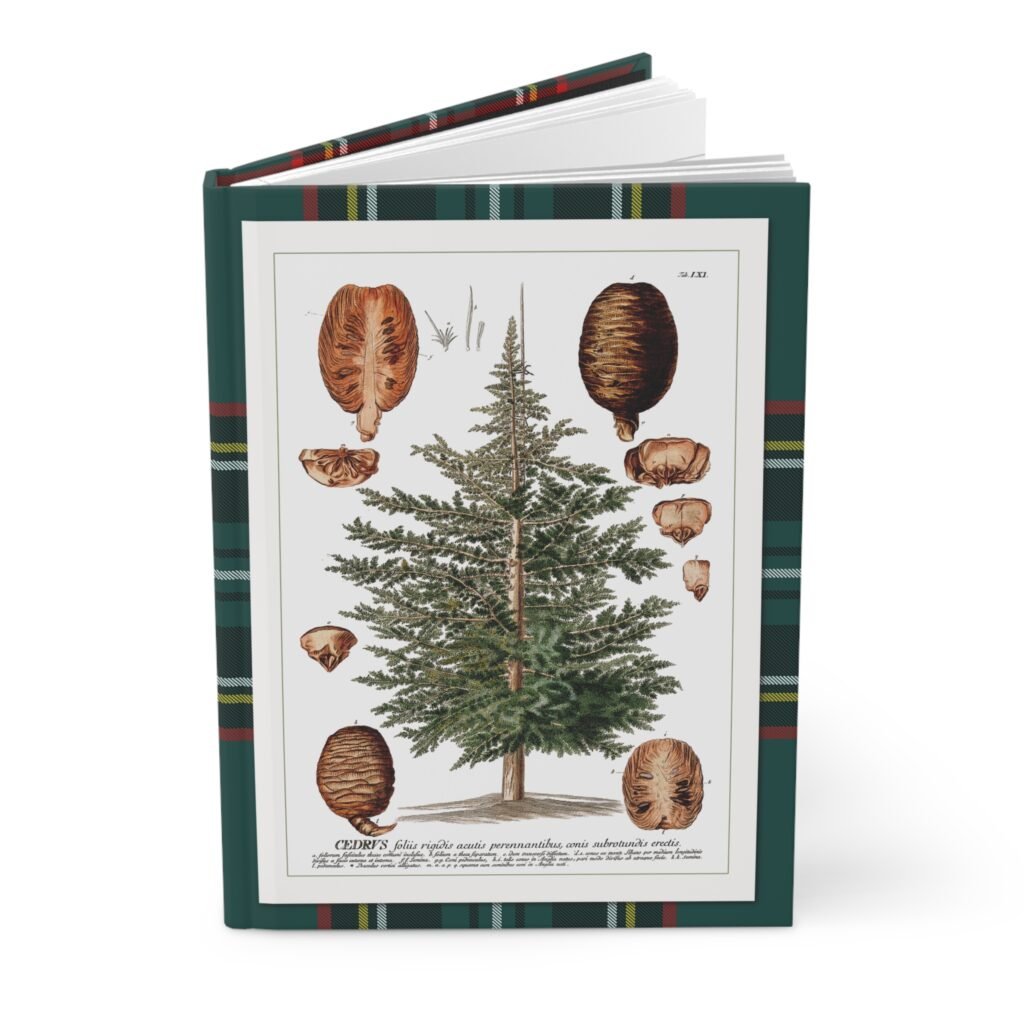
✨ Bring botanical history to your writing. If you share our love for classical engravings and the rich history behind vintage prints, we invite you to explore this special edition. Click the link below to view the fine details and add this historic piece to your stationery collection: the Antique Botanical Cedrus Journal in our store.
References
- Trew, C. J., & Ehret, G. D. (1750–1773). Plantae selectae quarum imagines ad exemplaria naturalia Londini in hortis curiosorum nutrita. Nuremberg: Johann Jakob Haid / Johann Elias Haid.
- Calmann, G. (1977). Ehret: Flower painter extraordinary. London: Elron Press.
- Lack, H. W. (2001). The Botanical Garden of Karl zu Leiningen-Westerburg and the work of Georg Dionysius Ehret. Anales del Jardín Botánico de Madrid, 59(1), 123-135.