scientific illustration

Vibrant angelfish and various tropical marine species swim through clear turquoise water above a colorful coral reef with pink, yellow, and brown corals.

The Most Fantastical Fish Ever Painted: Louis Renard’s Poissons, Écrevisses et Crabes (1719)

In 1719, a Franco-Dutch bookseller named Louis Renard published in Amsterdam what would become one of the most extraordinary — and most debated — works of natural history ever printed. Its plates show fish with nearly human lips, crabs with carapaces like ceremonial shields, a unicorn fish, and even a mermaid — and yet modern ichthyologists have identified the genus of nearly every animal depicted.

The Most Fantastical Fish Ever Painted: Louis Renard’s Poissons, Écrevisses et Crabes (1719) Read More »

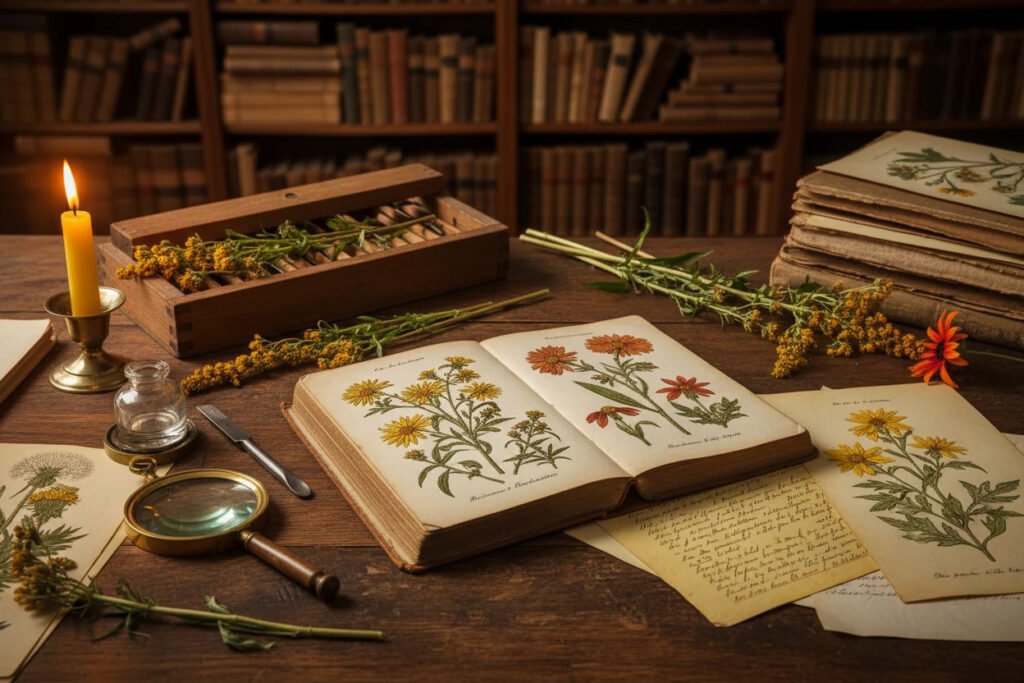
An early 19th-century botanist's wooden study desk illuminated by candlelight, featuring open illustrated botanical books, hand-written manuscripts, a magnifying glass, pressed yellow flowers, and dried plant specimens in wooden trays.

The Botanist’s Hand: Christian Schkuhr and the Making of a Scientific Book in 1808

In 1808, Christian Schkuhr completed his Botanisches Handbuch in Wittenberg — writing the text, drawing the plants, and engraving the copper plates himself. This is the story of what it took to make a scientific book before photography, before lithography, before any of the shortcuts we take for granted.

The Botanist’s Hand: Christian Schkuhr and the Making of a Scientific Book in 1808 Read More »

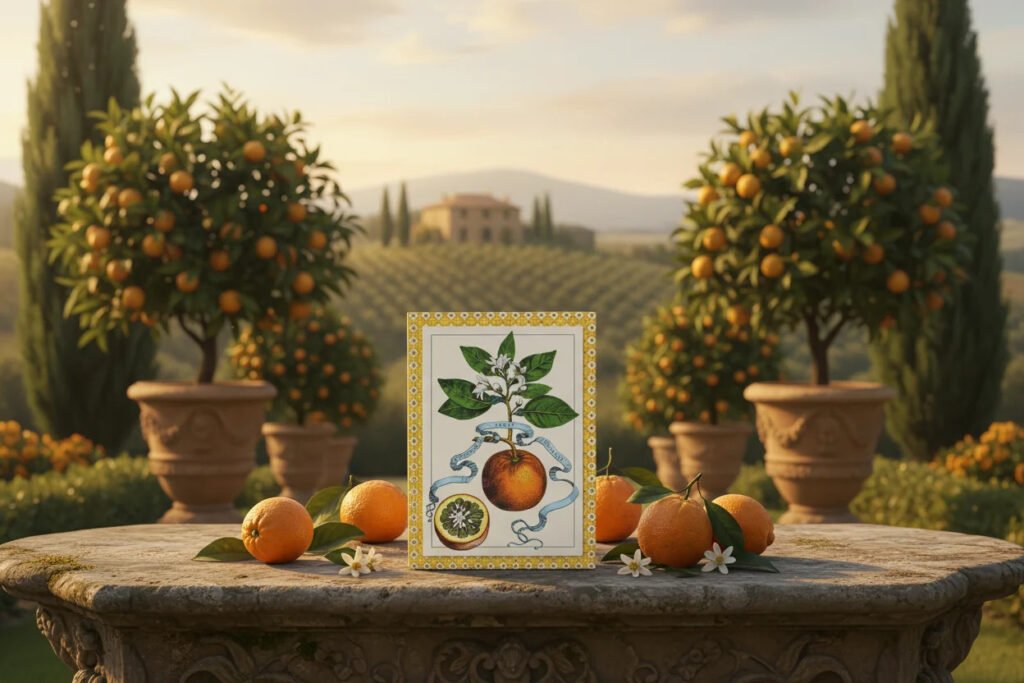
A botanical hardcover notebook featuring a vintage citrus illustration inspired by Giovanni Battista Ferrari's Hesperides stands on a stone table with fresh oranges and orange blossoms, set against an Italian villa garden with potted citrus trees and rolling hills at sunset.

The Golden Apple and the Baroque Garden: Ferrari’s Hesperides and the First Book of Citrus

When Giovanni Battista Ferrari published Hesperides in Rome in 1646, he created the first book in history devoted entirely to citrus — and one of the most sumptuous works of Baroque botanical art ever produced. A look at the Jesuit botanist, the Barberini patrons, the golden apples of mythology, and the copper engravings that made science and wonder inseparable.

The Golden Apple and the Baroque Garden: Ferrari’s Hesperides and the First Book of Citrus Read More »

A vintage natural history journal with a turtle illustration from Schöpf’s Naturgeschichte der Schildkröten stands on a desk in a scientist's study, surrounded by specimen jars, an open anatomical book, a brass magnifying glass, inkwell, and cabinet display of reptile skeletons.

The Shell and the Scalpel: Schöpf’s Naturgeschichte der Schildkröten and the Birth of Herpetology

Johann David Schöpf arrived in North America as a military surgeon during the Revolutionary War and left with the raw material for the most comprehensive study of turtles the world had ever seen. A look at the Naturgeschichte der Schildkröten, the birth of herpetology, and the extraordinary anatomy of the turtle shell.

The Shell and the Scalpel: Schöpf’s Naturgeschichte der Schildkröten and the Birth of Herpetology Read More »

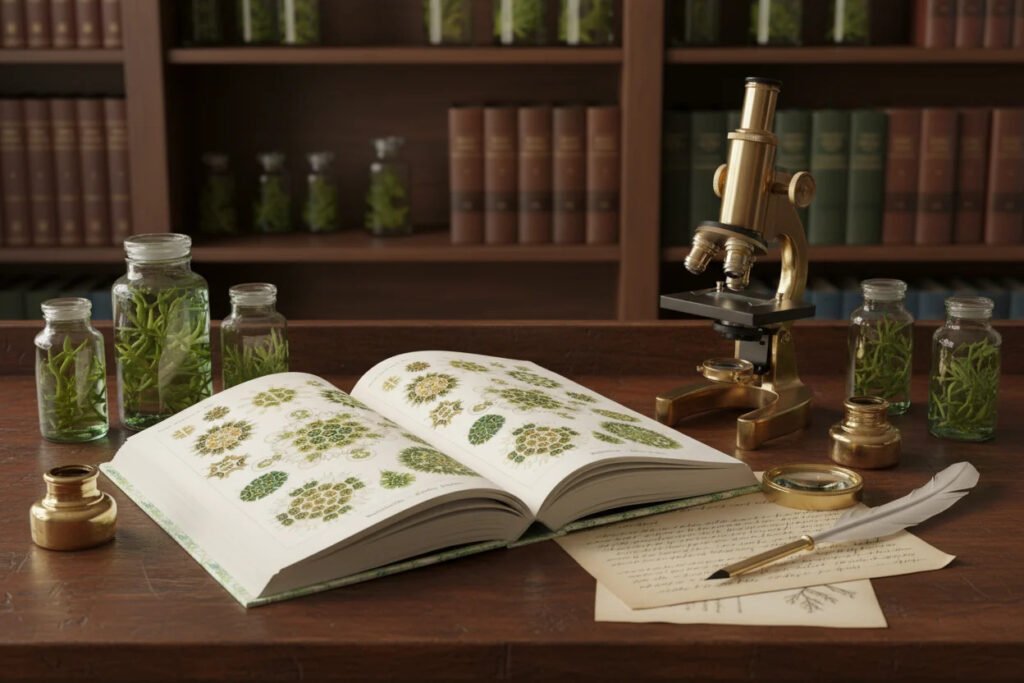
A 19th-century Victorian naturalist laboratory desk featuring an open book with Ernst Haeckel Kunstformen der Natur botanical algae illustrations, a brass microscope, specimen jars, inkwells, and handwritten notes.

The Geometry of Life: Ernst Haeckel, Kunstformen der Natur, and the Algae That Inspired Art Nouveau

Between 1899 and 1904, Ernst Haeckel published Kunstformen der Natur — 100 lithographic plates that revealed the hidden geometry of the living world. His algae illustrations inspired Art Nouveau, influenced a generation of designers, and documented organisms that produce most of the oxygen we breathe. This is the story of the book, the biologist, and the microscopic beauty that changed how we see nature.

The Geometry of Life: Ernst Haeckel, Kunstformen der Natur, and the Algae That Inspired Art Nouveau Read More »