


Victorian Floral Emblems — Robert Tyas 1896 Language of Flowers Hand-Coloured Plates
Victorian Floral Emblems — Robert Tyas 1896 Language of Flowers Hand-Coloured Plates
Couldn't load pickup availability
🚚 Add 2 items → Free shipping to USA
🌍 Add 4 items → Free shipping Worldwide
Shipping & Returns
Shipping & Returns
📦 Free shipping — no shipping costs, delivered instantly to your inbox after purchase. As digital products cannot be returned, all sales are final. However, if you experience any issue with your download, contact us and we'll make it right.
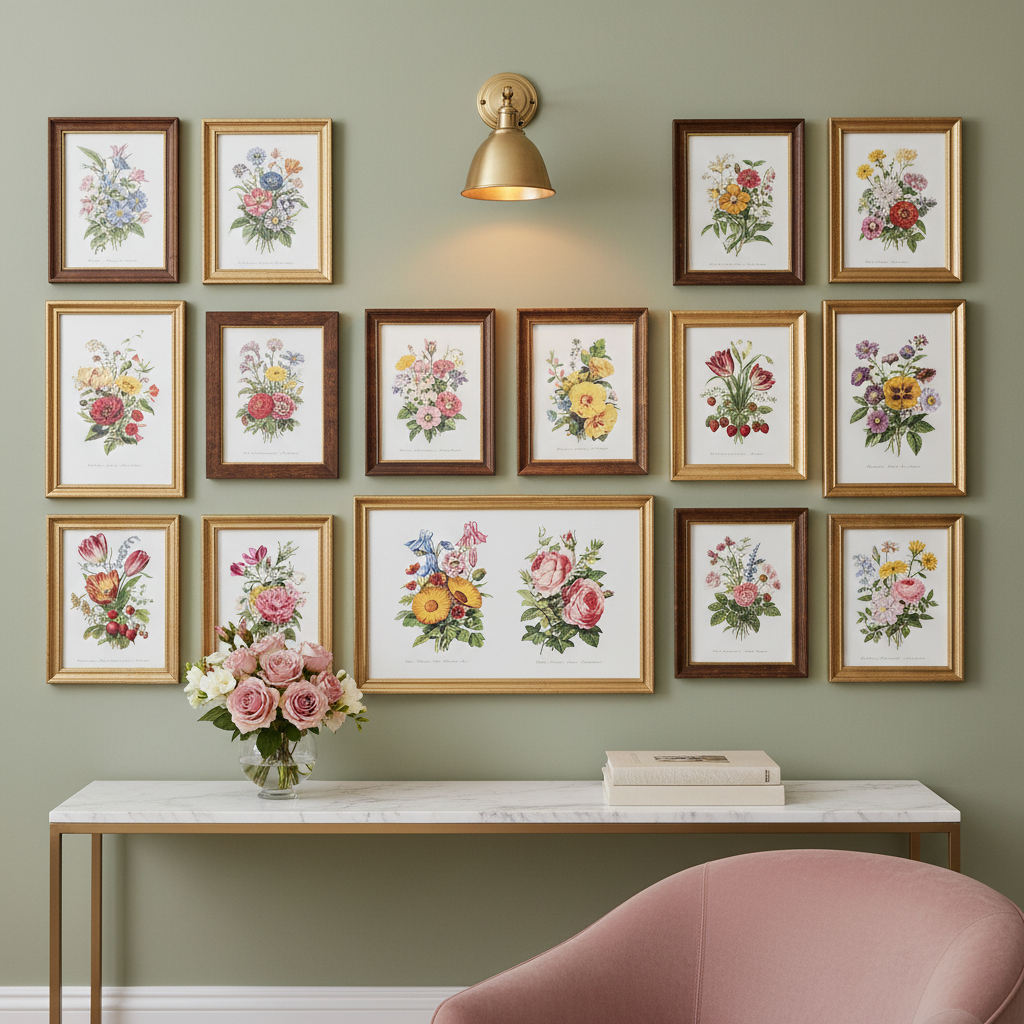
In the drawing rooms of Victorian England, a bouquet was never merely a bouquet — the moss rose meant voluptuous love, the forget-me-not meant remembrance, and to mix roses with violets was to say, in the most direct terms etiquette permitted: I love you. Robert Tyas’s The Language of Flowers (London, 1896) documented this tradition in twelve hand-coloured plates showing bouquets composed as deliberately as poems, each combination a message written in the secret language of Victorian floriography.
What You Receive
- 12 high-resolution archival images — 2454 × 3681 pixels at 300 DPI
- Format: JPEG, print-ready for professional reproduction
- Public domain — available for personal use
- Instant digital download upon purchase
- Source: Robert Tyas, The Language of Flowers, or, Floral Emblems of Thoughts, Feelings, and Sentiments (London, 1896)
Perfect For
- Wedding designers composing invitations and décor with Victorian botanical branding
- Graphic designers and illustrators drawn to Victorian botanical editorial projects
- Crafters making greeting cards and scrapbooks with hidden floral messages
- Home decorators framing elegant Victorian botanical art for gallery walls
- Educators and historians teaching Victorian culture, symbolism, and botanical art
- Florists and event stylists understanding traditional flower meanings for thoughtful arrangements
Share


These are lovely vintage florals. I’m glad to have them