Geology & Palaeontology Chart Hardcover Journal — Vincent Brooks Day & Son 1880 Mount Etna Cross-Section Geological Eras Victorian Science
Couldn't load pickup availability
Delivery & Returns
Delivery & Returns
Shipping from UK. To UK $4.49, to USA $32.99, European Countries $11.99, Rest of the World $18.99.
Our journals are printed on demand and shipped within 1-3 business days. Delivery time depends on the shipping method selected and the destination country. Please note that some countries may experience customs delays.
If your order arrives damaged or incorrect, contact us within 14 days at hello@lebonjournal.com and we'll resolve it immediately.
As each item is made to order, we don't accept returns for change of mind.
Carry the wonder of Victorian earth science—when geology charts mapped deep time, Mount Etna revealed its fiery secrets, and the story of life unfolded through ancient rock layers.
Around 1880, Vincent Brooks, Day & Son published educational geological and paleontological charts that combined scientific precision with artistic beauty. These Victorian-era diagrams were revolutionary tools for understanding Earth's history, illustrating the formation of rocks, the evolution of life, and the dynamic forces shaping our planet. This journal features two iconic geological illustrations from this golden age of scientific education: a comprehensive chart of geological eras and the evolution of life, and a dramatic cross-section of Mount Etna revealing the internal structure of one of the world's most active volcanoes.
Front Cover (Geology and Palaeontology Chart circa 1880): This journal's cover features a Victorian geological diagram showcasing Earth's history through stratified rock layers and the evolution of life across geological eras. The chart is organized chronologically from bottom to top: Igneous Rocks (representing Earth's formation), Palaeozoic or Primary (the age of arthropods, amphibians, and fishes, featuring ancient ferns and early land animals), Mesozoic or Secondary (the age of reptiles, showing pterosaurs and marine reptiles like plesiosaurs), and Cainozoic or Tertiary (the age of mammals, depicting elephants and mastodons that rose after the extinction of large reptiles). The illustration combines realistic depictions of flora and fauna with a cross-section view of Earth's crust, a hallmark of Victorian educational materials. Labeled species include Calamites (ancient tree-like plants), Ammonites (extinct marine mollusks), and Palaeotherium (prehistoric mammals). This type of diagram was essential for teaching the emerging sciences of geology and paleontology in the 19th century.
Back Cover (Imaginary Section Through Mount Etna circa 1910): The back cover presents a cross-section illustration of Mount Etna, the complex stratovolcano in Sicily, Italy, depicting its internal structure and eruptive processes. The diagram shows the flow of magma from deep within the Earth to the surface, illustrating the main central conduit and secondary fissures that penetrate overlying rock layers. At the base, various igneous rocks (granites, porphyries, and basalts) form the foundation, with a large reservoir of molten rock feeding the volcano's activity. The mountain is composed of extensive layers of trachytic rock and tertiary stratum, built up over millennia by alternating layers of solidified lava and ash. The diagram labels the town of Nicolosi on the flank, underground cavities filled with vapor, and indicates sea level, highlighting the proximity of human settlements to this active volcano. Mount Etna's frequent activity has made it one of the most studied volcanoes in the world and a UNESCO World Heritage site due to its geological significance.
Together, these illustrations represent the Victorian era's passion for understanding Earth's deep history and dynamic processes—when science education combined rigorous observation with artistic craftsmanship to make complex geological concepts accessible and inspiring.
Why This Journal Inspires:
- Features Victorian geological and paleontological charts from Vincent Brooks, Day & Son circa 1880
- Documents Earth's history through geological eras: Palaeozoic, Mesozoic, and Cainozoic periods
- Showcases Mount Etna cross-section revealing volcanic structure and eruptive processes
- Captures the golden age of scientific illustration when education combined precision with artistry
Product Details:
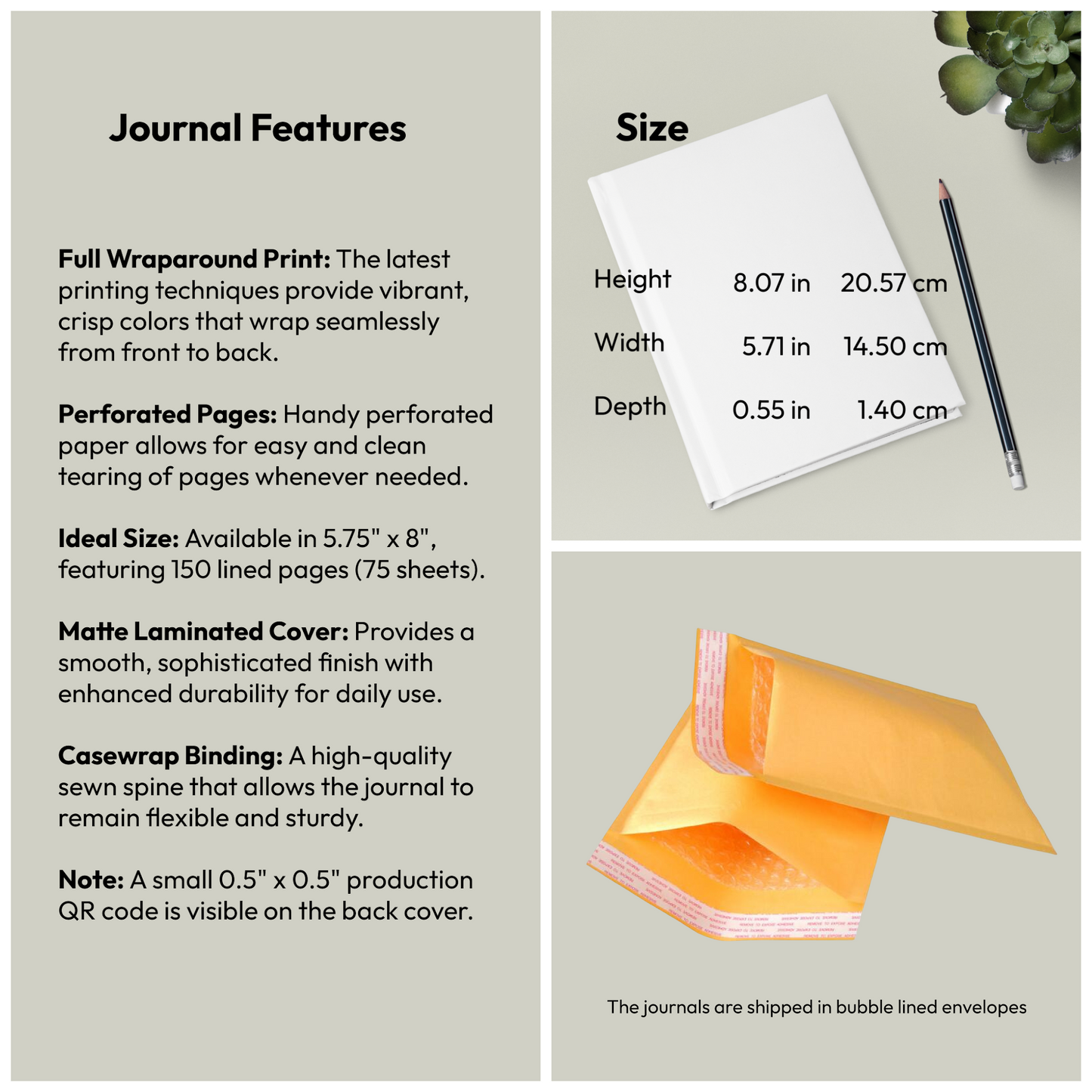
- Format: Hardcover journal with matte finish
- Pages: 128 ruled pages
- Binding: Durable casewrap binding
- Dimensions: 5.75" × 8" (14.6 cm × 20.3 cm)
- Weight: 0.22 lbs (100 g)
- Cover: Premium matte finish with Victorian geological illustrations
Perfect For:
- Geology students and earth science enthusiasts
- Paleontology scholars and fossil collectors
- Volcanology students and Mount Etna researchers
- Victorian science history admirers
- Field researchers and naturalists
- Educators teaching geological time and evolution
EU Compliance Notice: This product complies with EU regulations. For detailed information about materials, safety, and manufacturer details, please contact us or refer to the product packaging.
Carry the legacy of Victorian earth science—where every rock layer tells a story, every fossil marks an era, and Mount Etna's fire reveals the living planet beneath our feet.
EU Compliance
EU Compliance
Representative: HONSON VENTURES LIMITED, gpsr@honsonventures.com, 3 Gnaftis House flat 102, Limassol, Mesa Geitonia, 4003, CY.
Product information: Generic brand, 2-year warranty in EU and Northern Ireland as per Directive 1999/44/EC.
Care instructions: Use a soft, clean and dry cloth to gently brush any dust or dirt off from the center of book outwards.
Share