Skip to product information
1 of 8

Chemical Charts Hardcover Journal — Encyclopaedia Londinensis 1800-1801 John Wilkes Chemistry Apparatus Engravings

Chemical Charts Hardcover Journal — Encyclopaedia Londinensis 1800-1801 John Wilkes Chemistry Apparatus Engravings

Regular price $18.99 USD
Regular price Sale price $18.99 USD
Sale Sold out
Shipping calculated at checkout.

Delivery & Returns

Shipping from UK. To UK $4.49, to USA $32.99, European Countries $11.99, Rest of the World $18.99.
Our journals are printed on demand and shipped within 1-3 business days. Delivery time depends on the shipping method selected and the destination country. Please note that some countries may experience customs delays.
If your order arrives damaged or incorrect, contact us within 14 days at hello@lebonjournal.com and we'll resolve it immediately.
As each item is made to order, we don't accept returns for change of mind.

Carry the precision and wonder of the Chemical Revolution — when John Wilkes's Encyclopaedia Londinensis gave the apparatus of Lavoisier, Priestley, and Guyton de Morveau their most detailed and beautiful engravings, and the dawn of modern chemistry was documented with the exactitude of a scientific atlas.

The Chemical Revolution of the late 18th century — the transformation of alchemy into modern chemistry through the work of Antoine Lavoisier, Joseph Priestley, Carl Wilhelm Scheele, and Louis-Bernard Guyton de Morveau — produced an entirely new material culture of scientific apparatus: distillation equipment, pneumatic troughs, gas bells, eudiometers, gazometers, and furnaces of extraordinary ingenuity. John Wilkes's Encyclopaedia Londinensis (1800–1801) documented this apparatus in detailed copper engravings by Henry Lascelles — plates of scientific precision and unexpected visual beauty that captured the material world of the Chemical Revolution at the moment of its greatest achievement. This distinguished hardcover journal presents two of the most celebrated plates: Plate III (Modern Chemical Apparatus) on the front, and Plate VIII on the back.

Front Cover — Modern Chemical Apparatus, Plate III, Encyclopaedia Londinensis, John Wilkes, 1800:
The front cover presents Plate III — a comprehensive engraving of modern chemical apparatus documenting the distillation equipment, Woulfe apparatus, gas bells, and furnaces that defined the laboratory practice of the Chemical Revolution. The Woulfe apparatus — named after the Irish chemist Peter Woulfe — was one of the most versatile pieces of pneumatic chemistry equipment of the era, used to wash, collect, and transfer gases with a precision that made it indispensable to the new chemistry. Each piece of apparatus is captured with the meticulous detail of a technical drawing and the visual elegance of a scientific illustration.

Back Cover — Chemistry Plate VIII: Phosphorus Combustion Machine, Mercurial Gazometer & Guyton's Eudiometer, 1801:
The back cover presents Plate VIII — documenting three of the most sophisticated pieces of apparatus in the Chemical Revolution's experimental repertoire: the phosphorus combustion machine, used to study the chemistry of combustion and the composition of the atmosphere; the mercurial gazometer, an instrument for measuring and storing gases with mercury as the sealing fluid; and Guyton de Morveau's eudiometer, used to measure the purity of air by analyzing its oxygen content. Together, the three instruments represent the cutting edge of pneumatic chemistry in 1801 — the experimental tools that allowed Lavoisier and Priestley to overturn the phlogiston theory and establish the modern understanding of combustion and respiration.

Why This Journal Inspires:

  • John Wilkes's Encyclopaedia Londinensis (1800–1801) chemistry plates — Henry Lascelles's engravings of Chemical Revolution apparatus at their most precise and beautiful
  • Woulfe apparatus, distillation equipment, and gas bells (Plate III) — the material culture of pneumatic chemistry documented with scientific exactitude
  • Phosphorus combustion machine, mercurial gazometer, and Guyton's eudiometer (Plate VIII) — the instruments that overturned the phlogiston theory and established modern chemistry
  • The perfect companion for laboratory notes, scientific observations, research journaling, or daily reflections inspired by the precision and wonder of Enlightenment science

Product Details:

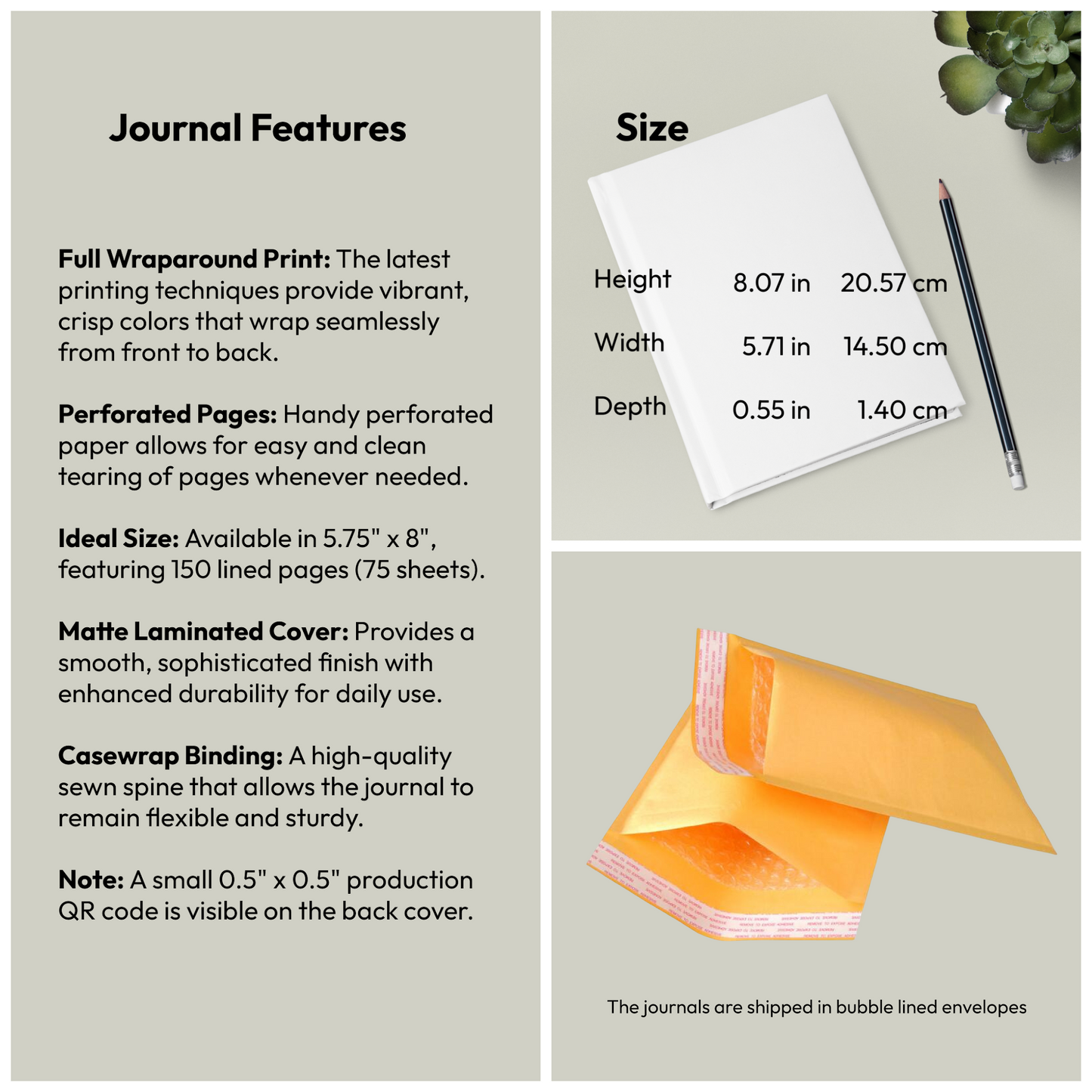
  • Format: Hardcover lined journal
  • Pages: 150 perforated lined pages for easy removal
  • Binding: Casewrap sewn binding
  • Dimensions: 5.5 × 8.5 inches
  • Weight: Approximately 400g
  • Cover: Matte laminated full-wrap print

Perfect For:

  • Chemists, laboratory professionals, and science history enthusiasts
  • Students and researchers of the history of chemistry and the Chemical Revolution
  • Scientific illustration and Enlightenment science collectors
  • Gift for anyone captivated by the precision, ingenuity, and beauty of early scientific apparatus
  • Educators teaching the history of chemistry, Lavoisier, Priestley, and the phlogiston debate
  • Writers and creatives inspired by the intersection of science, art, and Enlightenment inquiry

Carry the precision and wonder of the Chemical Revolution — where Wilkes's engraving plates and Lascelles's copper needle gave the apparatus of Lavoisier and Priestley the scientific portrait they deserved.

EU representative: HONSON VENTURES LIMITED, gpsr@honsonventures.com, 3, Gnaftis House flat 102, Limassol, Mesa Geitonia, 4003, CY
Product information: Generic brand, 2 year warranty in EU and Northern Ireland as per Directive 1999/44/EC
Care instructions: Use a soft, clean and dry cloth to gently brush any dust or dirt off from the center of book outwards.

EU Compliance

Representative: HONSON VENTURES LIMITED, gpsr@honsonventures.com, 3 Gnaftis House flat 102, Limassol, Mesa Geitonia, 4003, CY.
Product information: Generic brand, 2-year warranty in EU and Northern Ireland as per Directive 1999/44/EC.
Care instructions: Use a soft, clean and dry cloth to gently brush any dust or dirt off from the center of book outwards.

View full details