Skip to product information
1 of 8

Hummingbird Hardcover Journal — John Gould 1849 & William Davis 1835 Trochilidae Victorian Ornithology Gold Leaf Lithograph Art

Hummingbird Hardcover Journal — John Gould 1849 & William Davis 1835 Trochilidae Victorian Ornithology Gold Leaf Lithograph Art

Regular price $18.99 USD
Regular price Sale price $18.99 USD
Sale Sold out
Shipping calculated at checkout.

Delivery & Returns

Shipping from UK. To UK $4.49, to USA $32.99, European Countries $11.99, Rest of the World $18.99.
Our journals are printed on demand and shipped within 1-3 business days. Delivery time depends on the shipping method selected and the destination country. Please note that some countries may experience customs delays.
If your order arrives damaged or incorrect, contact us within 14 days at hello@lebonjournal.com and we'll resolve it immediately.
As each item is made to order, we don't accept returns for change of mind.

Carry the iridescent wonder of the hummingbird — when John Gould gave the Trochilidae their most magnificent gold-leaf portraits, and William Davis's 1835 copper engravings first introduced British naturalists to the extraordinary hovering flight and jewel-like plumage of the world's smallest birds.

John Gould (1804–1881) — the greatest bird illustrator of the Victorian era — devoted five volumes and 360 hand-colored lithographs to the hummingbirds of the Americas in his monumental A Monograph of the Trochilidae, or Family of Humming-Birds (1849–1861). Working with artist Henry Constantine Richter, Gould developed a revolutionary technique of applying gold leaf to the lithographic plates to capture the iridescent, metallic shimmer of hummingbird plumage — a quality he described as “the most brilliant objects in the creation.” Fourteen years earlier, in 1835, the Scottish naturalist William Davis had published the first detailed copper engravings of hummingbird species in the Edinburgh Journal of Natural History, pioneering the scientific documentation of the Trochilidae in Britain. This distinguished hardcover journal unites both traditions: Gould and Richter's gold-leaf lithographs on the front, and Davis's 1835 copper engravings on the back.

Front Cover — Trochilidae Gold Leaf Lithographs, John Gould & Henry Constantine Richter, 1849:
The front cover presents Gould and Richter's hand-colored gold-leaf lithographs from the Monograph of the Trochilidae — neotropical species rendered with the iridescent, metallic shimmer that made these plates the most technically innovative and visually spectacular natural history illustrations of the Victorian era. The gold leaf technique captures the extraordinary optical phenomenon of hummingbird plumage: the way feathers shift from deep black to blazing emerald, ruby, or sapphire depending on the angle of light. Each species is depicted in hovering flight, wings a blur of motion, long bill extended — the essential gesture of the hummingbird captured with scientific accuracy and artistic magnificence.

Back Cover — Trochilus Hummingbird Copper Engravings, William Davis, Edinburgh Journal of Natural History, 1835:
The back cover presents William Davis's 1835 copper engravings of Trochilus hummingbird species — among the earliest detailed scientific illustrations of hummingbirds published in Britain, documenting the extraordinary diversity of the Trochilidae with the precision of a naturalist who understood that the hummingbird represented one of nature's most extraordinary evolutionary achievements. Together, the two covers trace the arc of Victorian hummingbird illustration — from Davis's pioneering copper needle to Gould's revolutionary gold leaf, fourteen years and a revolution in natural history art.

Why This Journal Inspires:

  • John Gould and Henry Constantine Richter's gold-leaf lithographs from the Monograph of the Trochilidae (1849) — the most technically innovative hummingbird illustrations ever produced
  • William Davis's 1835 copper engravings from the Edinburgh Journal of Natural History — the pioneering scientific documentation of the Trochilidae in Britain
  • The arc of Victorian hummingbird illustration — from Davis's copper needle to Gould's gold leaf, fourteen years and a revolution in natural history art
  • The perfect companion for birdwatching field notes, nature journaling, or daily reflections inspired by the iridescent wonder of the world's smallest birds

Product Details:

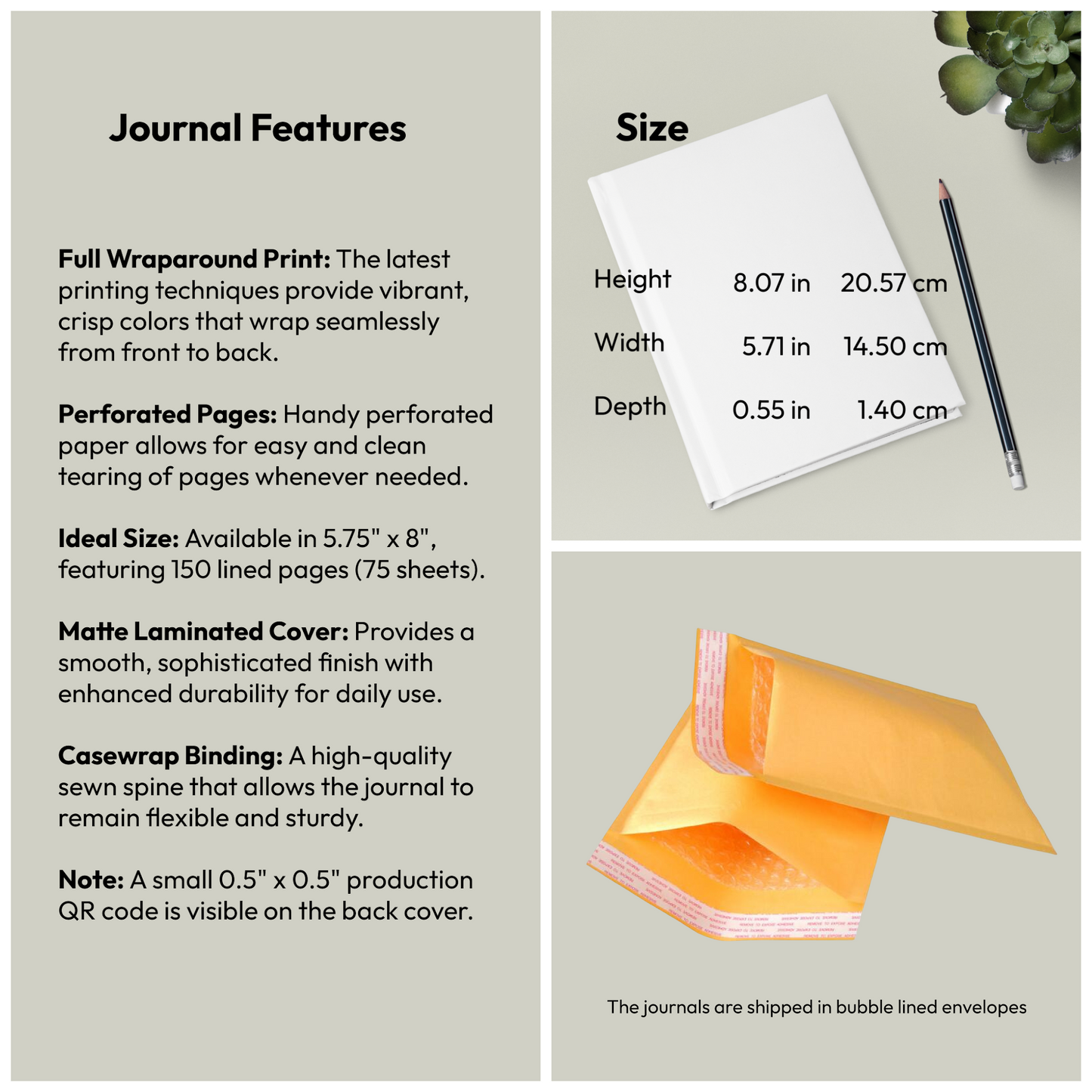
  • Format: Hardcover lined journal
  • Pages: 150 perforated lined pages for easy removal
  • Binding: Casewrap sewn binding
  • Dimensions: 5.5 × 8.5 inches
  • Weight: Approximately 400g
  • Cover: Matte laminated full-wrap print

Perfect For:

  • Birders, ornithology enthusiasts, and hummingbird admirers
  • Victorian natural history and scientific illustration collectors
  • Garden observers and pollinator garden enthusiasts
  • Gift for anyone captivated by the iridescent beauty and extraordinary diversity of the hummingbird
  • Students and researchers of Victorian ornithology and the history of natural history illustration
  • Writers and artists inspired by the jewel-like brilliance of the world's most spectacular birds

Carry the iridescent wonder of the hummingbird — where Gould's gold leaf and Davis's copper needle gave the Trochilidae the portraits they deserved, and the world's smallest birds revealed themselves as the most brilliant objects in creation.

EU representative: HONSON VENTURES LIMITED, gpsr@honsonventures.com, 3, Gnaftis House flat 102, Limassol, Mesa Geitonia, 4003, CY
Product information: Generic brand, 2 year warranty in EU and Northern Ireland as per Directive 1999/44/EC
Care instructions: Use a soft, clean and dry cloth to gently brush any dust or dirt off from the center of book outwards.

EU Compliance

Representative: HONSON VENTURES LIMITED, gpsr@honsonventures.com, 3 Gnaftis House flat 102, Limassol, Mesa Geitonia, 4003, CY.
Product information: Generic brand, 2-year warranty in EU and Northern Ireland as per Directive 1999/44/EC.
Care instructions: Use a soft, clean and dry cloth to gently brush any dust or dirt off from the center of book outwards.

View full details