Arentina Arendsen and the Art of Dutch Botanical Illustration in the Nineteenth Century
In the second half of the 19th century, the Dutch botanical illustration tradition reached one of its finest expressions in the work of Arentina Hendrica Arendsen (1836–1915) — a painter whose chromolithographic plates for Haarlem's Flora (1872–1881) united the scientific precision of botanical documentation with the decorative richness of the Dutch still life tradition that had made the flower painting of the Golden Age the most admired in Europe. Working in Haarlem at the height of the Dutch bulb industry, Arendsen produced images of tulips, hyacinths, narcissus, irises, lilies, and anemones that were simultaneously garden references, scientific records, and works of art — documents of a moment when Dutch floriculture was supplying the gardens of Europe and Dutch botanical illustration was at the peak of its achievement.

The Dutch Flower Painting Tradition
The tradition within which Arendsen worked had its roots in the Dutch Golden Age of the 17th century, when painters like Jan Brueghel the Elder, Ambrosius Bosschaert, and Rachel Ruysch developed the flower still life into one of the most technically demanding and commercially successful genres in European art. The great Dutch flower paintings of the 17th century were not botanical documents in the strict sense — they typically combined flowers from different seasons in a single composition that could never have existed in nature — but they were painted with a botanical accuracy that reflected close observation of living specimens, and they served as records of the exotic and expensive flowers that the Dutch bulb trade was introducing to European gardens.
The tulip, above all, was the emblem of this tradition. The tulip mania of 1636–37 — the speculative bubble in tulip bulb futures that has become one of the most celebrated episodes in the history of financial markets — was a symptom of the extraordinary value that Dutch society placed on rare and beautiful flower varieties, and the flower paintings of the period documented these varieties with the same care that a jeweler might apply to precious stones. By the 19th century, the speculative frenzy had long subsided, but the Dutch bulb industry remained the most important in the world, and Haarlem — the center of the industry since the 17th century — was still the city where the finest tulips, hyacinths, narcissus, and irises were bred, cultivated, and exported to the gardens of Europe and America.
Arentina Arendsen: Life and Training
Arentina Hendrica Arendsen was born in Amsterdam in 1836 and moved to Haarlem in 1851, where she would spend the rest of her working life. She trained under Cornelis Lieste (1817–1861), a romantic landscape painter whose influence on her development as an artist was primarily technical — he taught her the careful observation and precise rendering of natural forms that would define her botanical work — rather than thematic, since her mature work was entirely devoted to the floral still life rather than the landscape.
Arendsen exhibited regularly at the major Dutch art exhibitions of the period, including the Tentoonstelling van Levende Meesters (Exhibition of Living Masters), and her work was well received by critics who admired the combination of botanical accuracy and decorative richness that characterized her best paintings. She was a member of the Haarlem drawing society Kunst zij ons Doel (Let Art Be Our Goal), and she participated in the broader cultural life of a city that was, in the second half of the 19th century, one of the most important centers of Dutch artistic and horticultural activity.
Haarlem's Flora and the Chromolithographic Plate
Haarlem's Flora — published between 1872 and 1881 by A.C. van Eeden & Co. under the editorship of the botanist Frederik Willem van Eeden — was one of the most ambitious botanical publishing projects of 19th-century Holland: a comprehensive illustrated survey of the bulbous and tuberous plants that formed the core of the Haarlem bulb industry, produced in chromolithographic plates of exceptional quality and distributed to subscribers across Europe. The publication combined scientific botanical descriptions with decorative illustrations designed to appeal to both the specialist and the general reader — the gardener planning a spring border, the collector of botanical art, the horticulturalist documenting new varieties.
Chromolithography — the process of color printing from multiple lithographic stones, each carrying a different color, that was developed in the 1830s and reached its technical peak in the 1870s and 1880s — was the ideal medium for botanical illustration of this kind. Unlike the hand-colored engravings that had dominated botanical publishing since the 17th century, chromolithography could reproduce the full tonal range and color complexity of a watercolor original with a consistency and at a cost that made high-quality illustrated publications accessible to a much wider audience. The chromolithographic plates of Haarlem's Flora — printed in up to twelve colors from stones prepared by skilled lithographers working from Arendsen's original paintings — achieved a richness and accuracy of color reproduction that contemporaries found remarkable.
The Plates: Botanical Precision and Decorative Richness
Arendsen's plates for Haarlem's Flora document the full range of the Haarlem bulb tradition: tulips in their extraordinary variety of color and form, from the single early varieties to the elaborate doubles and parrots; hyacinths in pink, blue, white, and yellow; narcissus and daffodils in the forms that Dutch breeders had developed over two centuries; irises, both the bearded varieties of the garden and the Spanish iris (Iris xiphium) that was a specialty of the Haarlem trade; lilies, including the Madonna lily (Lilium candidum) and the tiger lily; and a range of less familiar bulbous plants — the Amaryllis, the Clivia, the Camassia, the Cyclamen, the Anemone — that reflected the expanding range of the Victorian bulb trade as new species arrived from South Africa, Japan, and the Americas.
Each plate combines botanical accuracy — the precise rendering of petal form, leaf structure, and stem habit that allowed a gardener to identify a variety with confidence — with the compositional skill and decorative sensibility of the still life tradition. Arendsen arranged her specimens not as isolated botanical specimens on a white ground, in the manner of the strictly scientific illustration, but as richly composed groups that recalled the flower paintings of the Dutch Golden Age — overlapping, intertwining, filling the picture plane with color and form in a way that was simultaneously informative and beautiful.
Legacy
Arentina Arendsen died in Haarlem in 1915, at the age of seventy-eight, having devoted more than six decades to the botanical still life. Her work for Haarlem's Flora remains her most enduring achievement — a document of the Dutch bulb industry at its Victorian peak, and of the botanical illustration tradition at one of its finest moments. The plates she produced between 1872 and 1881 continue to be reproduced and collected as works of art in their own right, valued for the same combination of scientific precision and decorative richness that made them celebrated in their own time.
In an era when botanical illustration is experiencing a revival of interest — as both a scientific practice and an art form — Arendsen's work stands as a reminder of what the tradition at its best could achieve: images that are simultaneously accurate enough to serve as garden references and beautiful enough to hang on a wall.
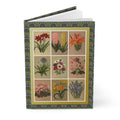
If Arendsen's botanical artistry inspires you, our Floral Journal — Arendsen Haarlem's Flora 1872 Dutch Botanical brings eighteen of her chromolithographic bulbous plant studies to the cover of a hardcover journal.
References
- Van Eeden, F. W. (ed.) Haarlem's Flora. A.C. van Eeden & Co., Haarlem, 1872–1881.
- Blunt, W. & Stearn, W. T. The Art of Botanical Illustration. Antique Collectors' Club, 1994.
- Pavord, A. The Tulip. Bloomsbury, 1999.
- Goldgar, A. Tulipmania: Money, Honor, and Knowledge in the Dutch Golden Age. University of Chicago Press, 2007.
- Segal, S. Flowers and Nature: Netherlandish Flower Painting of Four Centuries. Rembrandt, 1990.