Anne Pratt and the Quiet Beauty of British Grasses
There is a particular kind of attention that Victorian naturalists brought to the world around them — a willingness to look closely at things that most people walk past without noticing. Anne Pratt had this quality in abundance. She spent her life looking at the grasses, sedges, and ferns of the British countryside, and she transformed what she saw into some of the most beautiful and scientifically accurate botanical illustrations of the nineteenth century.

Her masterwork, The Flowering Plants, Grasses, Sedges, and Ferns of Great Britain, was published between 1855 and 1873. It was a landmark in the democratization of natural history — a work that used the innovative Baxter color printing method to produce affordable chromolithographs of remarkable accuracy and beauty, bringing British flora into homes that could never have afforded the hand-colored botanical folios of an earlier era.
Anne Pratt: The People’s Botanist
Anne Pratt (1806–1893) was born in Strood, Kent, and came to botany through ill health rather than formal training. A childhood illness left her physically frail, and she turned to the study of plants as a gentle outdoor pursuit that her constitution could sustain. What began as a therapeutic hobby became a lifelong vocation.
She was largely self-taught, learning from field observation and from the botanical literature available to her. She had no university education — universities were closed to women — and no access to the great herbaria and botanical gardens that were the preserve of professional male naturalists. What she had was patience, a keen eye, and an extraordinary ability to communicate her enthusiasm to a general audience.
Her books were written for the same readers she was herself: people who loved the natural world, who wanted to understand what they were looking at when they walked through a meadow or along a hedgerow, but who had no access to the technical literature of professional botany. She wrote clearly, warmly, and with genuine affection for her subjects. Her illustrations matched her prose: precise enough to be scientifically useful, beautiful enough to be genuinely pleasurable.
So celebrated was her work that Queen Victoria herself requested copies of all her publications — a royal endorsement that speaks to the quality and reach of her achievement. In 1897, she was elected a Fellow of the Botanical Society of Edinburgh, one of the few scientific honors available to women at the time.
The Baxter Color Printing Method
The chromolithographs in The Flowering Plants, Grasses, Sedges, and Ferns of Great Britain were produced using the Baxter color printing process — a technique developed by George Baxter in the 1830s that combined an intaglio base plate with a series of relief color blocks to produce prints of remarkable tonal richness and accuracy.
The Baxter process was more affordable than hand-coloring and more accurate than earlier color printing methods. It allowed Pratt’s publishers to produce chromolithographs that could be sold at a price accessible to middle-class readers — the schoolteachers, clergymen, governesses, and amateur naturalists who formed the core of the Victorian natural history audience. The result was a work that was both scientifically serious and genuinely popular: a combination that was rare in any era.
Plates 250 and 251: Grasses of Britain
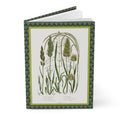
Plate 251 illustrates six British grass species with the meticulous precision that made Pratt’s work indispensable to Victorian naturalists. Ovate Hare’s Tail Grass (Lagurus ovatus), Spreading Millet Grass (Milium effusum), Awned Nit Grass (Gastridium lendigerum), Common Feather Grass, Annual Beard Grass, and Perennial Beard Grass are each rendered in full botanical detail, accompanied by diagrams of their floral segments. The chromolithograph technique gives each specimen a luminous, almost watercolor quality — scientific documentation elevated to art.
Plate 250 depicts seven species of British grasses including Cultivated Canary Grass (Phalaris canariensis), Reed Canary Grass (Phalaris arundinacea), Common Sea Reed (Ammophila arenaria), Common Cat’s-tail Grass (Phleum pratense), Alpine Cat’s-tail Grass, Purple Stalked Cat’s-tail, and Meadow Foxtail. Each specimen is rendered with the same meticulous care, the delicate seed heads and stems captured with a precision that served both the field botanist and the armchair naturalist equally well.
Together, the two plates offer a portrait of the British grassland in miniature — the species that fill the meadows, marshes, and coastal dunes of England, rendered with a care and attention that transforms the ordinary into the extraordinary.
The Victorian Tradition of Botanical Illustration
Pratt worked in a tradition of British botanical illustration that stretched back to the seventeenth century — a tradition that understood scientific accuracy and artistic beauty not as competing values but as complementary ones. The best botanical illustration is always both: it must be accurate enough to be useful for identification, and beautiful enough to communicate the wonder of the natural world.
What Pratt added to this tradition was accessibility. Her work was not produced for the libraries of great houses or the collections of wealthy patrons. It was produced for ordinary people who loved plants and wanted to understand them better. In this sense, she was a democratizer of natural history — someone who believed that the beauty and complexity of the British flora belonged to everyone, not just to those with the education and resources to access the professional literature.
It is a belief that feels entirely contemporary. The meadow grasses that Pratt documented in 1855 are still there — in the hedgerows and verges, the coastal dunes and upland pastures of Britain. They still reward the same careful attention that Pratt brought to them. And her plates still offer the best introduction to that attention that has ever been produced.