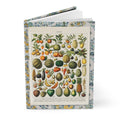
The Larousse Garden: Adolphe Millot and the Art of French Botanical Illustration
Share
In the closing years of the nineteenth century, the Larousse publishing house was engaged in one of the great projects of French popular education: the production of encyclopedias that would bring scientific knowledge to every household in France. The Grand Dictionnaire universel du XIXe siècle, the Nouveau Larousse illustré, the Larousse pour tous — these were not merely reference works but cultural monuments, expressions of the French Republican belief that knowledge should be universal, accessible, and beautiful.
For the botanical illustrations that would give these encyclopedias their visual authority, Larousse turned to Adolphe Millot (1857–1921) — naturalist painter, entomologist, and one of the most gifted scientific illustrators of his generation. Millot had trained in the tradition of French natural history illustration that stretched back to the great botanical artists of the Jardin des Plantes, and he brought to the Larousse commissions a combination of scientific accuracy and artistic sensibility that no photograph of the era could match.
The Art of the Chromolithograph
Millot's plates were produced using chromolithography — the process of printing in multiple colors from a series of stone or zinc plates, each carrying a different color, that together built up the rich, layered tones of the finished illustration. In skilled hands, chromolithography could achieve effects of extraordinary subtlety: the bloom on a plum, the translucency of a grape, the matte skin of a tomato, the glossy surface of a cherry — each required a different approach to the layering of color, and Millot understood them all.
The fruit and vegetable plates published in the 1898 and 1900 Larousse editions document over 50 varieties with the precision of a botanist and the eye of a painter. Heirloom apples and pears in their dozens of named varieties; berries from the garden and the hedgerow; tomatoes, peppers, and aubergines from the kitchen garden; exotic specimens that had only recently arrived in European markets — all are rendered with the same care, the same attention to the specific qualities of each variety, that makes Millot's work so valuable as a historical document as well as a work of art.
The French Garden Tradition
Behind Millot's plates lies a deep tradition of French horticultural culture. France in the late nineteenth century was a country of extraordinary agricultural diversity — a landscape of regional varieties, local cultivars, and inherited knowledge about the cultivation of fruit and vegetables that had accumulated over centuries. The Larousse encyclopedias were, among other things, an attempt to document this diversity before it was lost to the standardization that industrialization was beginning to impose on French agriculture.
Many of the varieties Millot illustrated are now rare or extinct — casualties of the twentieth century's preference for uniformity, shelf life, and ease of transport over flavor, appearance, and regional character. His plates are, in this sense, a record of a world that has largely disappeared: the world of the French kitchen garden at its most diverse and abundant.
A Document of Belle Époque Science
Millot's work for Larousse appeared at a moment when the relationship between science and art was particularly productive in France. The Belle Époque was an era of scientific optimism — a belief that the natural world could be understood, documented, and made available to everyone through the combination of rigorous observation and beautiful illustration. Millot embodied this belief: his plates are simultaneously scientific documents and works of art, serving the botanist and the general reader equally well.
Explore the journal: