The Golden Age of the Neighbourhood Bakery: Victorian Bread Culture and the Art of the Boulangerie
Share
Before the supermarket, before the sliced loaf, before the industrial bakery, there was the neighbourhood boulangerie — and it was, by almost any measure, one of the finest institutions in the history of human civilisation.
In the late 19th century, the local bakery was not merely a place to buy bread. It was the place where the rhythms of daily life were measured: the morning queue for the fresh baguette, the smell of the oven that announced the start of the day, the baker who knew every customer by name and every family by its preferences. The bread was not a commodity. It was a craft — and the craftsman was a figure of genuine social importance.
The Victorian Art of Bread
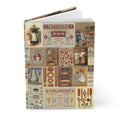
The Victorian era produced an extraordinary visual culture around bread and baking. As commercial printing became cheaper and more sophisticated, bakeries and flour merchants commissioned advertisements of remarkable quality — confident typography, detailed engravings of bread varieties, decorative borders that celebrated the baker’s craft with the same visual ambition that other industries reserved for their most prestigious products.
These advertisements were not merely commercial. They were documents of a food culture at its most self-confident — a world in which the sourdough loaf, the French baguette, the tiered wedding cake, and the elaborate pastry composition were all understood as achievements worthy of celebration. The technical bread diagrams of the period — documenting the science of fermentation, the geometry of scoring, the precise temperatures of the oven — combined the rigour of a scientific textbook with the visual elegance of Victorian commercial art.
The French Boulangerie
At the centre of Victorian bread culture stood the French boulangerie — the model against which all other bakeries were measured, and the source of the techniques, the vocabulary, and the aesthetic standards that defined artisan bread-making across Europe and beyond.
The French baker was a figure of almost mythological status in the late 19th century. The boulangerie with its elegant window display, its aproned baker, its baskets of baguettes and boules, its glass cases of croissants and pain au chocolat, represented a standard of craft and community that the Victorian world admired and sought to emulate. French baking manuals were translated and adapted across Europe; French bread varieties — the baguette, the brioche, the pain de campagne — became the aspirational standard for bakers from London to Vienna.
Bread as Community
What the Victorian bakery understood, and what we are only now rediscovering in the age of the artisan sourdough revival, is that bread is not merely food. It is the most fundamental expression of human craft, community, and care — the product of a process that requires patience, skill, and attention, and that rewards the baker and the eater alike with something that no industrial process has ever quite replicated.
The vintage baking advertisements, the French boulangerie scenes, the technical bread diagrams, and the pastry illustrations of the late 19th century are not merely historical curiosities. They are documents of a food culture that understood bread as it deserves to be understood — as craft, as community, as art.
Explore the journal that celebrates Victorian bread culture →