Truth to Nature: Jemima Blackburn and the Art of Drawing Animals from Life
In the middle of the nineteenth century, most European naturalists who wanted to draw an animal had a problem: the animal was usually dead. The great natural history collections of the period — the British Museum, the Muséum National d’Histoire Naturelle in Paris, the museums of Oxford and Cambridge — were built around specimens: stuffed, mounted, preserved in alcohol, arranged in glass cases with careful labels. These specimens were invaluable for taxonomy, for the precise measurement and comparison of anatomical features. But they were, in a fundamental sense, wrong. A stuffed giraffe does not move. A mounted zebra does not breathe. And an illustration made from a dead animal, however accurate its proportions, cannot capture the quality that distinguishes a living creature from a very good imitation of one.
Jemima Blackburn understood this. And her insistence on drawing animals from life — at a time when most of her contemporaries were content to work from specimens — produced some of the most remarkable wildlife illustrations of the Victorian era.
Jemima Blackburn: A Life in Drawing
Jemima Blackburn, née Wedderburn, was born in Edinburgh in 1823 into a family of considerable intellectual distinction. Her father, James Wedderburn, was Solicitor General for Scotland; her brother, David Wedderburn, was a noted classical scholar. The family moved in the highest circles of Edinburgh society, and Jemima grew up surrounded by books, art, and scientific conversation.
She began drawing as a child and never stopped. By her early twenties she had developed a style that was immediately recognizable: precise, energetic, and above all alive. Where other illustrators of the period produced images that were technically accurate but somehow inert, Blackburn’s drawings captured the particular quality of a living animal — the way a bird holds its head, the way a horse shifts its weight, the way a giraffe folds its improbable legs to drink.
In 1849 she married Hugh Blackburn, Professor of Mathematics at the University of Glasgow, and moved to Roshven, the family estate on the west coast of Scotland. The remote location, far from the great natural history collections of the cities, reinforced her commitment to drawing from life. The animals she had access to — the birds and mammals of the Scottish Highlands, the livestock of the estate, the animals she encountered on visits to zoos and menageries — became her primary subjects. She drew them constantly, in pencil and watercolour, in sketchbooks that she filled with the same patient attention that a scientist brings to a laboratory notebook.
Darwin, Ruskin, and the Validation of a Method
The quality of Blackburn’s work did not go unnoticed. John Ruskin, the most influential art critic of the Victorian era, admired her drawings and corresponded with her over many years. His praise was specific and revealing: he valued not merely the technical skill of her work but its quality of observation, its fidelity to the living animal rather than the dead specimen.
Charles Darwin’s admiration was, if anything, more significant. Darwin was deeply interested in animal expression and behaviour — interests that would eventually produce his 1872 book The Expression of the Emotions in Man and Animals — and he recognised in Blackburn’s work a quality of observation that was directly relevant to his scientific concerns. He corresponded with her, sought her advice on illustrations for his own publications, and cited her work as an example of the kind of careful, life-based observation that he believed was essential to the understanding of animal behaviour.
The admiration of Darwin and Ruskin — two men whose intellectual authority in Victorian Britain was almost without parallel — established Blackburn’s reputation on a foundation that mere technical skill could not have provided. She was recognised not merely as a talented illustrator but as a serious observer of the natural world, whose commitment to “truth to nature” placed her in the tradition of the great naturalist-artists of the preceding century.
The 1859 Lithographs: Giraffes, Zebras, and Camels
The lithographs published by Edmonston and Douglas in Edinburgh around 1859 represent some of Blackburn’s finest work in the educational illustration genre. Created for a series designed to introduce Victorian children and families to the wildlife of distant lands, they combine scientific accuracy with the compositional skill of a practised artist.
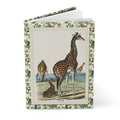
Plate IX, “The Giraffe,” is a masterpiece of the genre. Three giraffes and their young are depicted in various natural poses — standing, reclining, drinking — each pose chosen to demonstrate a different aspect of the animal’s anatomy and behaviour. The drinking giraffe is particularly remarkable: the splayed forelegs, the extended neck, the awkward grace of an animal whose proportions make the simplest actions into feats of engineering. Blackburn has drawn this from observation, and it shows. The pose is not the idealised, symmetrical stance of a specimen illustration but the particular, slightly ungainly reality of a living animal doing something difficult.
The companion plate — “Zebras, Dromedary, Camel” — is equally accomplished. Two zebras occupy the upper half of the composition, their striped coats rendered with careful attention to the pattern variations that distinguish individual animals. Below them, a uniformed keeper holds a dromedary (the single-humped Arabian camel) alongside a Bactrian camel (two-humped), with the silhouette of pyramids in the background — a romanticised Egyptian setting that reflects the Victorian fascination with exploration and colonial encounters with wildlife. The contrast between the two camel species is precisely observed: the dromedary’s leaner build, the Bactrian’s heavier frame and shaggier coat.
The lithography was executed by B. Hummel, who transferred Blackburn’s original watercolours onto lithographic stone with considerable skill. The hand-colouring that was added to the printed outlines gives the plates a warmth and depth that purely printed colour could not yet achieve in 1859. Blackburn’s distinctive “JB” initials appear on both compositions — a quiet assertion of authorship in a period when women illustrators were often uncredited.
The Legacy: Beatrix Potter and Beyond
Jemima Blackburn’s influence extended beyond her own lifetime and her own work. Among those who admired her drawings was a young Beatrix Potter, who encountered Blackburn’s illustrations as a child and later acknowledged their influence on her own development as an artist. The connection is not difficult to see: Potter’s commitment to drawing animals from life, her insistence on capturing the particular quality of a living creature rather than a generalised type, her combination of scientific precision with artistic warmth — all of these qualities have their precedent in Blackburn’s work.
Blackburn continued to draw and paint until late in her life, producing illustrations for books, contributing to natural history publications, and filling sketchbook after sketchbook with the animals she observed at Roshven and on her travels. She died in 1909, at the age of eighty-five, having spent more than six decades in the patient, joyful practice of drawing animals from life.
Her legacy is not merely a body of work — though that body of work is considerable — but a method and a principle. The principle that the living animal is always more interesting than the dead specimen. That the particular is always more revealing than the general. That truth to nature, pursued with patience and skill, produces images that no amount of technical accuracy alone can achieve.
Further Reading
- Blackburn, J. (1862). Birds Drawn from Nature. Edinburgh: Edmonston and Douglas.
- Darwin, C. (1872). The Expression of the Emotions in Man and Animals. London: John Murray.
- Ruskin, J. (1857). The Elements of Drawing. London: Smith, Elder and Co.
- Lear, L. (2007). Beatrix Potter: A Life in Nature. London: Allen Lane.
- Dance, S. P. (1978). The Art of Natural History: Animal Illustrators and Their Work. London: Country Life Books.
- Blunt, W., & Stearn, W. T. (1994). The Art of Botanical Illustration. Woodbridge: Antique Collectors’ Club.

The Safari Journal from LeBonJournal features Jemima Blackburn’s 1859 hand-coloured lithographs of giraffes, zebras, and camels from her Edinburgh educational series. 150 lined pages, hardcover, 5.5 × 8.5 inches. Explore the journal →