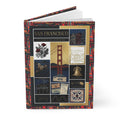
San Francisco on Foot: A Flâneur's Guide to the City's Most Iconic Neighbourhoods
There are cities you visit and cities you walk. San Francisco is emphatically the latter. It is a city that rewards the slow traveller — the one who puts away the map, follows the gradient of a hill, and lets the neighbourhood reveal itself one block at a time. The San Franciscans have a word for this, borrowed from the French: flânerie. The art of the purposeful wander. The discipline of paying attention.
If you are planning a trip to San Francisco — or dreaming of one — this is your invitation to see it differently. Not as a checklist of attractions, but as a city of neighbourhoods, each with its own character, its own light, its own particular way of being in the world. Lace up your most comfortable shoes. San Francisco is waiting.
Alamo Square and the Painted Ladies
Start where every first-time visitor eventually ends up: Alamo Square, the hilltop park that offers the most photographed view in San Francisco. The Painted Ladies — the row of seven Victorian houses on Steiner Street, their ornate facades painted in three or more colours to highlight their architectural details — stand against the downtown skyline in a composition that has appeared on postcards, television shows, and travel posters for decades.
But the Painted Ladies are only the beginning. The streets around Alamo Square are lined with Victorian and Edwardian houses in every shade of the palette — sage green, dusty rose, ochre, slate blue — each one a small masterpiece of late 19th-century domestic architecture. Walk north along Steiner, east along Hayes, and you will find yourself in Hayes Valley, one of the city's most pleasant neighbourhoods for a morning stroll: independent coffee shops, design boutiques, and the occasional street musician.
Don't miss: The view from the top of Alamo Square at golden hour, when the light turns the Victorian facades to amber and the downtown towers glow behind them.
The Mission District
Cross the city to the Mission District and you enter a different San Francisco entirely — warmer, louder, more colourful, and considerably sunnier than the fog-wrapped neighbourhoods to the west. The Mission is San Francisco's oldest neighbourhood, founded around the Mission Dolores in 1776, and it wears its history on its walls: literally, in the extraordinary murals that cover entire building facades along Clarion Alley and Balmy Alley.
These murals — hundreds of them, painted and repainted over decades by local artists — are one of the great outdoor art galleries of the American West. They document the neighbourhood's Latino heritage, its political history, its losses and its celebrations. Walk slowly. Read the walls. The Mission will tell you its own story if you give it time.
For lunch, join the queue at one of the taquerias on Mission Street — the Mission burrito, a San Francisco invention, is larger, more generously filled, and more carefully constructed than anything you will find elsewhere. Eat it at a table on the pavement and watch the neighbourhood go by.
Don't miss: Mission Dolores, the oldest intact building in San Francisco, and the small cemetery behind it where the city's earliest residents are buried.
The Cable Cars
San Francisco's cable cars are not merely a tourist attraction — they are a working transit system, the last manually operated cable car system in the world, and a National Historic Landmark. Riding one is not a theme park experience but a genuine encounter with a technology invented in San Francisco in 1873 by Andrew Hallidie, who watched a horse-drawn carriage slip on a wet hill and decided there had to be a better way.
The Powell-Hyde line is the most scenic, climbing over Nob Hill and Russian Hill before descending to Aquatic Park and the bay. Sit on the outside bench if you can — the gripman will warn you to keep your elbows in on the curves — and watch the city unfold around you as the car crests each hill and the bay appears, blue and enormous, at the end of the street.
At the turnaround on Hyde Street, walk down to the waterfront and follow the Embarcadero east toward the Ferry Building, stopping at the Farmers Market if it is a Tuesday, Thursday, or Saturday morning. The Ferry Building's food hall is one of the finest in California.
Don't miss: The Cable Car Museum on Mason Street, where you can see the underground machinery — the cables that run beneath the city streets — in operation. Free, and genuinely fascinating.
The Golden Gate and Fort Point
No visit to San Francisco is complete without the Golden Gate Bridge — but the question is how to see it. The tourist buses stop at the vista point on the Marin side, which offers the classic postcard view. But the more interesting approach is on foot, from the San Francisco side, walking across the bridge itself.
Start at Crissy Field, the restored tidal marsh and beach that runs along the waterfront west of the Marina. Walk west along the shore, with the bridge growing larger ahead of you, until you reach Fort Point — the Civil War-era masonry fortification built directly beneath the southern anchorage of the bridge. Stand inside Fort Point and look up: the bridge arches overhead, its orange towers disappearing into the fog, and the scale of the engineering becomes suddenly, viscerally real.
From Fort Point, the path climbs to the bridge's pedestrian walkway. The crossing takes about 30 minutes at a leisurely pace. The views — of the bay, the city, Alcatraz, the Marin Headlands — are extraordinary in every direction. Dress warmly: the wind on the bridge is serious, and the fog can roll in without warning.
Don't miss: The view back toward the city from the middle of the bridge, with the downtown skyline framed between the towers.
Alcatraz
The island sits in the middle of the bay, visible from almost everywhere in the city, its white buildings catching the light on clear days and disappearing into the fog on others. Alcatraz — the Rock — was a federal penitentiary from 1934 to 1963, home to some of the most notorious criminals in American history, and the site of one of the most dramatic escape attempts in prison history.
The ferry from Pier 33 takes fifteen minutes. Book in advance — the island is one of the most visited sites in the National Park system, and tickets sell out weeks ahead in summer. The audio tour, narrated by former guards and inmates, is one of the best in the country: atmospheric, detailed, and genuinely moving in places.
Walk the perimeter of the island after the tour. The views of the city from Alcatraz are among the finest available — the skyline spread across the hills, the bridges spanning the bay, the green of the Marin Headlands beyond. It is a strange and beautiful place.
Don't miss: The gardens, restored by the Garden Conservancy, which were tended by inmates during the prison years and contain plants brought from around the world.
A Note on Walking San Francisco
San Francisco is a small city — seven miles by seven miles — but its hills make distances deceptive. The climb from the Castro to Twin Peaks is short in distance and considerable in effort. The descent from Russian Hill to Fisherman's Wharf is steep enough to make your knees complain by the third block.
The reward for this effort is a city that reveals itself differently from every angle. Each hill offers a new view, a new alignment of streets and water and sky. San Francisco is a city that changes as you move through it — which is, perhaps, the best possible argument for moving through it slowly, on foot, with a notebook in your pocket and nowhere particular to be.
 The San Francisco Journal from LeBonJournal features a vintage travel collage celebrating the Golden Gate Bridge, Painted Ladies, cable cars, and the spirit of flânerie californienne — in a sophisticated black and gold palette. 150 lined pages, hardcover, 5.5 × 8.5 inches. The perfect companion for your San Francisco adventure. Explore the journal →