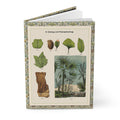
The Ginkgo Biloba: A Living Fossil
In the autumn, the Ginkgo biloba turns a precise and luminous yellow — not the gradual, mottled yellow of most deciduous trees, but a sudden, unanimous gold, as if the tree had made a decision. Then, within a day or two, all the leaves fall at once. It is one of the most dramatic performances in the plant kingdom, and it is performed by a tree that has been doing it, in essentially the same way, for approximately 270 million years. The Ginkgo biloba is the oldest tree species still living on Earth. It watched the dinosaurs rise and fall. It survived the asteroid impact that ended the Cretaceous. It outlasted the ice ages. It was growing in Hiroshima when the atomic bomb fell in 1945, and six of the trees within two kilometres of the hypocentre survived and are still alive today.

A Tree Without Relatives
The Ginkgo biloba is, in the most literal sense, one of a kind. It is the sole surviving member of the division Ginkgophyta — an entire branch of the plant kingdom that was once diverse and widespread, with dozens of species distributed across the supercontinent Pangaea, and that has been reduced, over 270 million years of extinction, to a single species. Its closest living relatives are the cycads and the conifers, but it is not closely related to either. It occupies its own evolutionary position, alone.
The fossil record of the Ginkgo is extraordinary. Ginkgo leaves have been found in rocks from the Permian period (approximately 270 million years ago), and they are immediately recognisable: the distinctive fan-shaped leaf with its central notch and its radiating veins is essentially unchanged from the fossils to the living tree. This is what makes the Ginkgo a “living fossil” in the strictest sense — not merely an ancient species, but one whose morphology has remained stable across geological time while the world around it has been transformed beyond recognition.
The paleobotanist Alexander-Paul Henckel documented Ginkgo biloba fossils in his 1905 phytopalaeological illustrations of Middle Tertiary marsh plants from Russia — plates of scientific rigour and unexpected visual beauty that captured the fossil leaf with the devotion to accuracy and elegance that defined the best natural history illustration of the era. To look at Henckel's illustration of the Ginkgo fossil is to see the same leaf that falls every autumn in the streets of Tokyo, New York, and Paris, preserved in Tertiary sediment and rendered in early 20th-century scientific ink.
The Age of the Dinosaurs
The Ginkgo reached the peak of its diversity during the Jurassic and Cretaceous periods — the age of the dinosaurs — when Ginkgo forests covered large areas of the northern hemisphere. Fossils of Ginkgo leaves have been found on every continent except Antarctica, and the genus was represented by at least fifteen species during the Mesozoic era. The dinosaurs that browsed in these forests — the sauropods, the hadrosaurs, the ceratopsians — would have eaten Ginkgo leaves as a routine part of their diet. The tree that shades the pavements of modern cities was once part of the diet of the largest animals that ever walked the Earth.
The end-Cretaceous mass extinction, approximately 66 million years ago, eliminated the non-avian dinosaurs and caused the collapse of many plant communities. The Ginkgo survived, but its diversity did not recover. Through the Paleogene and Neogene periods, the number of Ginkgo species declined steadily, until by the Pleistocene — the ice age epoch that ended approximately 11,700 years ago — only a single species remained, confined to a small area of central China.
Survival in China
The Ginkgo biloba survived the ice ages in the mountains of central China — in the provinces of Zhejiang, Anhui, and Guizhou — where it persisted in small, isolated populations. Whether any truly wild populations survive today is a matter of scientific debate: the trees that grow in the remote mountain valleys of Tianmushan in Zhejiang province are sometimes cited as wild Ginkgos, but they may be the descendants of trees planted by Buddhist monks centuries ago. The Ginkgo has been cultivated in China for at least a thousand years, valued for its edible seeds (the “ginkgo nut”, a staple of East Asian cuisine and traditional medicine) and for its association with longevity and resilience.
Buddhist and Taoist monasteries played a crucial role in the Ginkgo's survival. The trees were planted in temple gardens across China, Japan, and Korea, where they were protected and venerated. Some of the oldest living Ginkgos are found in temple grounds: the Gu Ginkgo tree in Shandong province is estimated to be over 3,000 years old. The association between the Ginkgo and Buddhist monasteries meant that when European botanists first encountered the tree in Japan in the late seventeenth century, they found it growing in temple gardens — and assumed, incorrectly, that it was a Japanese species.
The Tree Comes West
The German botanist Engelbert Kaempfer was the first European to describe the Ginkgo scientifically, in his Amoenitatum Exoticarum of 1712, based on specimens he had observed in Japan during his time as a physician with the Dutch East India Company. The name Ginkgo is Kaempfer's Latinisation of the Japanese ginkyo, itself a rendering of the Chinese yìnxìng (銀杏), meaning “silver apricot” — a reference to the appearance of the seed. The species name biloba, given by Carl Linnaeus in 1771, refers to the two-lobed shape of the leaf.
The first Ginkgo trees planted in Europe arrived in the Netherlands in the 1730s, at the botanical garden in Utrecht. From there, the tree spread rapidly through European botanical gardens and aristocratic parks, valued for its extraordinary antiquity, its unusual leaf shape, and its resistance to disease and pollution. By the nineteenth century, the Ginkgo was a fashionable ornamental tree across Europe and North America, and it remains one of the most widely planted urban trees in the world today — valued precisely for the qualities that allowed it to survive 270 million years: toughness, adaptability, and an indifference to adversity that borders on the philosophical.
Hiroshima
On 6 August 1945, the atomic bomb dropped on Hiroshima destroyed everything within a radius of approximately two kilometres from the hypocentre. The heat, the blast, and the radiation killed an estimated 80,000 people instantly and destroyed virtually all living things in the immediate vicinity. In the spring of 1946, six Ginkgo trees within two kilometres of the hypocentre were found to have survived and were already producing new buds. They are still alive today, preserved as monuments to the resilience of life. One of them, at the Housenbou temple approximately one kilometre from the hypocentre, bears a plaque with the words: “No more Hiroshima.”
The Ginkgo's survival at Hiroshima is not miraculous — it is the result of the same biological characteristics that have allowed the species to persist through 270 million years of geological upheaval: a remarkable capacity for regeneration, a resistance to environmental stress, and a root system that can survive damage that would kill most other trees. But it has become, in the decades since 1945, one of the most powerful symbols of resilience and survival in the natural world.

Our Phytopalaeology Journal reproduces Alexander-Paul Henckel's 1905 scientific illustrations of Middle Tertiary marsh plant fossils — including the Ginkgo biloba leaf — across its covers.
References
Crane, P. (2013). Ginkgo: The Tree That Time Forgot. Yale University Press.
Henckel, A. P. (1905). Phytopalaeontologische Studien über die Sumpfpflanzen. St. Petersburg.
Kaempfer, E. (1712). Amoenitatum Exoticarum. Lemgo.
Raven, P. H., Evert, R. F., & Eichhorn, S. E. (2005). Biology of Plants. W. H. Freeman.
Zhou, Z., & Zheng, S. (2003). “The missing link in Ginkgo evolution.” Nature, 423, 821–822.