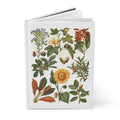
El Tesoro de la Juventud: The Encyclopedia That Taught a Continent to Know Its Plants
On the bookshelves of homes across Latin America and Spain, from the 1910s through the 1960s and beyond, there stood a set of volumes that occupied a particular place in the imagination of the children who grew up with them. El Tesoro de la Juventud — The Treasure of Youth — was not merely an encyclopedia. It was a world in miniature: a place where a child could learn about the stars and the oceans, about history and geography, about the animals of the savanna and the plants of the forest, all rendered in illustrations of such color and clarity that the natural world seemed to open itself to the curious reader like a door.
El Tesoro de la Juventud was first published in Spanish in 1913, adapted from the British Children’s Encyclopaedia edited by Arthur Mee and published by the Amalgamated Press in London from 1908. The Spanish adaptation, published by W.M. Jackson Inc. — a New York-based publisher that specialised in encyclopedic works for the Spanish-speaking market — was an immediate success. It went through numerous editions over the following decades, and it became one of the most widely distributed reference works in the Spanish-speaking world. In many Latin American homes, it was the only encyclopedia the family owned — and it was treated accordingly, with the reverence that attaches to objects that are both useful and beautiful.
The botanical plates of El Tesoro de la Juventud were among its most distinctive features. Produced in the tradition of popular scientific illustration that had flourished in Europe and North America since the mid-nineteenth century, they combined scientific accuracy with the visual appeal that a publication aimed at children required: vivid colors, clear compositions, and a sense of the plant as a living thing rather than a dried specimen. The plates depicting “Vegetales de Aprovechamiento Industrial” (Plants of Industrial Use) and “Las Sabrosas y Aromáticas Especias” (The Delicious and Aromatic Spices) are characteristic examples: each plant identified by its common name in Spanish and its scientific name in Latin, each illustration detailed enough to allow identification in the field.
The Tradition of Popular Botanical Education
The botanical plates of El Tesoro de la Juventud stood within a long tradition of popular botanical education that stretched back to the great herbals of the sixteenth century — the works of Fuchs, Bock, and Brunfels that had first established the convention of combining precise plant illustration with practical information about use and identification. By the nineteenth century, this tradition had been transformed by the development of chromolithography and the expansion of popular publishing, which made illustrated botanical works available to a much wider audience than the expensive hand-colored volumes of earlier centuries.
This conviction had particular resonance in Latin America, where the relationship between human communities and the plant world had always been intimate and complex. The indigenous peoples of the Americas had developed, over thousands of years, a botanical knowledge of extraordinary depth — knowledge of medicinal plants, of edible species, of plants used in construction, in dyeing, in ritual — that continued to be practiced in rural communities across the continent. El Tesoro de la Juventud, with its plates of useful and aromatic plants, participated in this tradition of botanical knowledge transmission.
Industrial Plants and Aromatic Spices
“Vegetales de Aprovechamiento Industrial” documents the plants that provided the raw materials for the industries of the early twentieth century: rubber, cotton, flax, hemp, sisal — the fibrous and resinous plants that were the basis of the global economy before synthetic materials. For a child growing up in Latin America in the 1920s or 1930s, many of these plants would have been familiar from the landscape — the rubber trees of the Amazon basin, the cotton fields of the coastal plains, the henequen plantations of the Yucatán.
“Las Sabrosas y Aromáticas Especias” documents a different relationship with the plant world: the relationship of pleasure and flavor. Pepper, cinnamon, cloves, nutmeg, vanilla, saffron — the spices that had driven the great voyages of exploration in the fifteenth and sixteenth centuries, that had made fortunes and founded empires — are here rendered in botanical detail for the curious child who wanted to know why the food on the table tasted the way it did.
A Treasure on the Shelf
For those who grew up with El Tesoro de la Juventud, the encyclopedia carries a particular kind of emotional weight — the weight of a childhood spent in the company of its illustrations, of afternoons lost in its pages. The botanical plates, with their vivid colors and their careful Latin names, were an introduction to the idea that the plants around us have names and histories and uses, that the natural world is not merely a backdrop to human life but a subject worthy of attention and knowledge.
That idea — that knowing the names of things is a form of respect for them — is as relevant now as it was when El Tesoro de la Juventud first appeared on the bookshelves of Latin American homes more than a century ago.

If El Tesoro de la Juventud and the tradition of popular botanical education resonate with you, the El Tesoro de la Juventud Journal brings its botanical plates to a hardcover journal — 150 lined pages, ready for plant notes, field observations, or whatever your curiosity requires.
References
- Mee, A. (ed.) The Children’s Encyclopaedia. Amalgamated Press, London, 1908–1910.
- W.M. Jackson Inc. El Tesoro de la Juventud. New York / Buenos Aires, 1913 and subsequent editions.
- Bleichmar, D. Visible Empire: Botanical Expeditions and Visual Culture in the Hispanic Enlightenment. University of Chicago Press, 2012.
- Pardo-Tomás, J. El tesoro natural de América: Oviedo, Monardes, Hernández. Nivola, Madrid, 2002.
- Lack, H.W. Garden Eden: Masterpieces of Botanical Illustration. Taschen, Cologne, 2008.