Mounted on Grey: Sir Ralph Abercromby, Lord Cathcart, and the Art of British Military Portraiture 1798–1799
Share
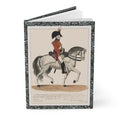
In the summer of 1799, a London print publisher produced a hand-coloured engraving of Sir Ralph Abercromby, Colonel of the Second (or Royal North British) Regiment of Dragoons — the celebrated Royal Scots Greys. The portrait, now held in the collection of the Victoria and Albert Museum (inventory no. E.3435–1938), shows Abercromby in the full dress uniform of his regiment: the red coat with yellow facings, gold epaulettes, and the distinctive bicorn with plumage, mounted on one of the grey horses for which the Scots Greys were famous across Europe.
Within two years, Abercromby would be dead — killed at the Battle of Alexandria in 1801, in one of the most celebrated deaths in British military history.
The Art of the Military Print
The late 18th century was the golden age of the British military print. As Britain mobilised against Revolutionary France, a tradition of regimental portraiture flourished in London’s print shops — hand-coloured engravings documenting the uniforms, commanders, and horses of the British Army with a precision that served both as historical record and as objects of pride for officers, their families, and the regimental mess.
These were not cheap productions. The hand-colouring — applied by teams of specialist colourists working from master copies — required skill and patience, and the results could be extraordinarily beautiful: the scarlet of a cavalry coat, the gleam of gold embroidery, the careful rendering of a horse’s coat in the specific colour mandated by regimental tradition. The prints were sold by subscription, dedicated to the officers of the regiment, and signed by the proprietors — a formal act of honour that placed the engraving within the tradition of regimental commemoration.
Sir Ralph Abercromby and the Royal Scots Greys
Ralph Abercromby (1734–1801) was one of the most respected British commanders of his generation — a man known for his humanity towards his troops as much as for his military skill. He had served in the Seven Years’ War, commanded in the West Indies, and by 1799 was one of the senior figures of the British Army. His regiment, the Royal Scots Greys, was one of the most famous cavalry units in the British order of battle — distinguished by their grey horses, their bearskin caps, and their battle honours stretching back to the late 17th century.
The 1799 portrait captures Abercromby at the height of his reputation, two years before his death at Alexandria. When the British expedition to Egypt landed at Aboukir Bay in March 1801, Abercromby led the assault in person. He was wounded during the battle, and died of his wounds eight days later aboard HMS Foudroyant. His death was mourned across Britain, and he was commemorated with a monument in St Paul’s Cathedral — one of the first military figures to receive this honour.
Lord Cathcart and the Life Guards
William, Lord Cathcart (1755–1843) was a very different figure — a diplomat and soldier who would outlive Abercromby by more than four decades, eventually serving as British Ambassador to Russia during the Napoleonic Wars. In 1798, he was Colonel of the Second Regiment of Life Guards — the élite household cavalry regiment closest to the monarch, whose duties included the ceremonial protection of the sovereign and whose standards of dress were among the most exacting in the British Army.
The 1798 portrait shows Cathcart in the Life Guards’ red coat with blue facings, heavy gold embroidery, oversized epaulettes, and the bicorn with white and rose plume — mounted on a bay horse, conforming to the strict colour standards of the regiment. The formal dedication to “The Right Honourable William, Lord Cathcart” and his officers attests to the esteem in which these engravings were held as documents of military dress and regimental honour.
Two Portraits, One Era
Together, the Abercromby and Cathcart portraits document a pivotal moment in British military history — the years when Britain was mobilising against Revolutionary France, when the cavalry regiments that would fight at Waterloo were being shaped, and when the tradition of military portraiture was at its most vital. One man would die a hero’s death in Egypt; the other would live to see Napoleon’s final defeat. Both were immortalised in hand-coloured engravings of extraordinary beauty — and both now ride again on the covers of this journal.